Russian meta-analysis finds that adding Longidaza® to standard treatment for pelvic inflammatory disease nearly doubles the pregnancy rate
The findings were presented at the ASRM 2026 Scientific Congress & Expo in Baltimore, USA
MOSCOW, November 20, 2026 — The American Society for Reproductive Medicine (ASRM) held its annual Scientific Congress & Expo, one of the world’s leading forums in reproductive medicine, in Baltimore, Maryland, USA, on October 24–28, 2026. The scientific program featured a study by Russian researchers. It was presented by Igor Baranov, Doctor of Medical Sciences, Professor and Head of the Department of Scientific and Educational Programs at the Academician V.I. Kulakov National Medical Research Center for Obstetrics, Gynecology and Perinatology of the Ministry of Health of the Russian Federation.
The systematic review and meta-analysis covered 26 controlled studies involving 2,111 women. Its main finding was that adding bovhyaluronidase azoximer (Longidaza®) to standard treatment for pelvic inflammatory disease (PID) improved a wide range of outcomes, from symptom relief to pregnancy.
Why aren’t antibiotics enough?
PID remains one of the leading causes of chronic pelvic pain and female infertility. Even when appropriate antibiotics are started promptly, full recovery is not guaranteed: chronic pelvic pain persists in about 40% of patients, and roughly 19% of women remain infertile.
The reason lies in the nature of chronic inflammation. Pathogens form polymicrobial biofilms, and fibrosis develops in the surrounding tissue. Together, biofilms and fibrosis create a “scaffold” that shields microorganisms and limits antibiotic penetration. As long as this scaffold persists, inflammation can become chronic or recur, and reproductive function may be impaired.
Targeting the “scaffold” of inflammation
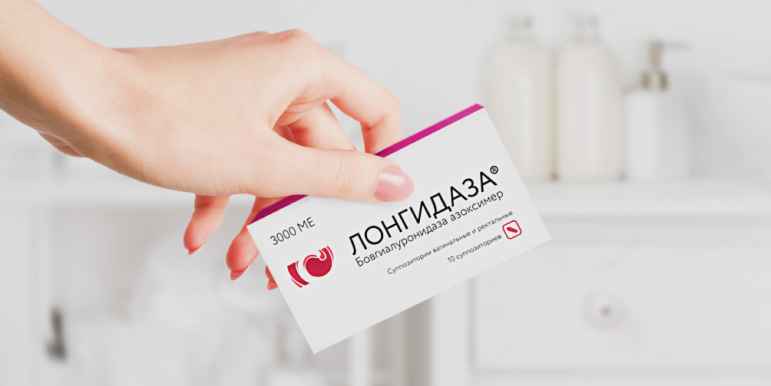
Effective treatment therefore needs to target both the pathogens and the environment that protects them. Bovhyaluronidase azoximer is designed to do exactly that. It is a conjugated hyaluronidase with antifibrotic and anti-inflammatory activity, and it can also disrupt the biofilm matrix.
Numerous Russian studies have documented the use of the medicine in gynecology, but until now their findings had not been pooled and analyzed quantitatively. The authors set out to fill this gap with their meta-analysis.
26 studies involving more than 2,000 patients
The researchers searched international and Russian scientific databases for publications up to December 2025 and selected 26 controlled studies. Of the women included, 1,234 received Longidaza® in addition to standard treatment, and 877 made up the control group. Eleven studies were randomized, four of which were placebo-controlled.
Twenty-two of the 26 studies enrolled women with tubal or uterine factor infertility. For these patients, the outcome of treatment can determine whether they are able to have a child.
From symptom relief to pregnancy
Compared with patients who received standard treatment alone, those who also received Longidaza® were 1.8 times as likely to achieve pelvic pain relief and 1.3 times as likely to have their dysmenorrhea resolve.
Laboratory findings were consistent with these clinical improvements. Clearance of pathogens from the cervical canal was 2.6 times as likely, which supports the idea that disrupting biofilms helps antibiotics reach their targets. The benefits were also durable: patients were 1.5 times as likely to remain recurrence-free over 12 months.
Most importantly for patients, the pregnancy rate after treatment was nearly twice as high as with standard treatment alone.
The authors also examined outcomes in women with chronic endometritis, a condition that often interferes with embryo implantation. With Longidaza®, endometrial ultrasound findings returned to normal 1.6 times as often, and CD138-positive plasma cell infiltration, a key histologic feature of the condition, decreased significantly. These findings suggest that the medicine may help restore endometrial structure and thereby improve conditions for pregnancy.
| Outcome | Studies / patients | RR (95% CI) |
|---|---|---|
| Pelvic pain relief | 13 / 983 | 1.80 (1.39–2.32) |
| Resolution of dysmenorrhea | 8 / 332 | 1.29 (1.11–1.50) |
| Clearance of pathogens from the cervical canal | 4 / 168 | 2.57 (1.82–3.63) |
| No recurrence over 12 months | 3 / 203 | 1.50 (1.27–1.77) |
| Pregnancy | 12 / 979 | 1.96 (1.61–2.39) |
| Chronic endometritis: normalization of endometrial ultrasound findings | 5 / 256 | 1.61 (1.34–1.94) |
| Chronic endometritis: no detectable CD138 expression | 3 / 207 | 7.17 (1.02–50.39) |
RR, risk ratio; CI, confidence interval. An RR above 1 favors Longidaza®. The reduction in CD138-positive plasma cell counts was reported as a standardized mean difference (Hedges’ g) of −0.91 (95% CI, −1.66 to −0.15). All pooled effects were statistically significant (p < 0.05).
“We tend to think of pelvic inflammatory disease as an infection that antibiotics alone can clear. Yet chronic inflammation also involves biofilms and fibrosis. These largely determine whether a woman’s pain persists, whether the disease recurs and whether she can become pregnant. The meta-analysis showed that adding bovhyaluronidase azoximer to standard treatment targets these mechanisms and leads to less pain, fewer recurrences and more pregnancies. Those are the outcomes that matter to patients,”
Russian research at an international congress
The presentation at ASRM reflects the interest of reproductive medicine specialists worldwide in Russian experience with enzyme therapy.
The full meta-analysis was published in the Russian peer-reviewed journal Akusherstvo i Ginekologiya (Obstetrics and Gynecology): Serov V.N., Baranov I.I., et al. 2026;(4):23–42. DOI: 10.18565/aig.2026.119
The study was conducted by leading Russian experts in obstetrics, gynecology and clinical microbiology: V.N. Serov, I.I. Baranov, N.V. Dolgushina, T.V. Priputnevich, M.I. Yarmolinskaya, I.A. Apolikhina, N.V. Zarochentseva, N.I. Tapilskaya, A.M. Savicheva, E.N. Andreeva, Yu.A. Semenov, S.V. Yureneva, Yu.E. Dobrokhotova, N.V. Mingaleva and G.R. Bayramova. The study received no external funding.
About ASRM
The American Society for Reproductive Medicine (ASRM) is one of the world’s leading professional organizations in reproductive medicine. Its annual Scientific Congress & Expo brings together specialists in reproductive medicine, gynecology, endocrinology and andrology from around the world.
Depression, social withdrawal and self-directed aggression: unusual manifestations of Fabry disease physicians should recognize