Depression, social withdrawal and self-directed aggression: unusual manifestations of Fabry disease physicians should recognize
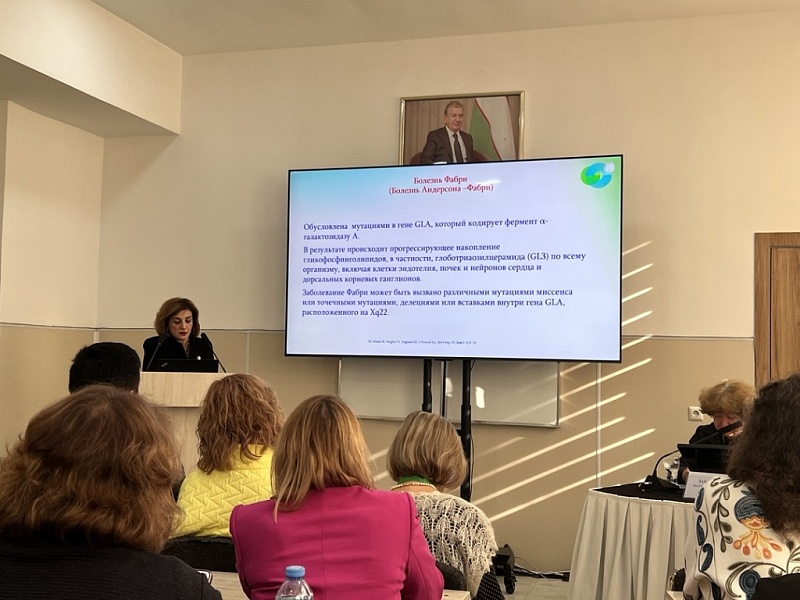
Children with Fabry disease may experience depression, self-directed aggression, suicidal thoughts and communication difficulties alongside internal organ involvement. Observations in clinical practice identified behavioral disorders in 25.7% of children with the condition. These findings were presented at a symposium supported by Petrovax Pharm during the 5th International Forum “Commonwealth Without Borders” in Samarkand.
Fabry disease is an inherited condition associated with mutations in the GLA gene, which is responsible for the production of the enzyme α-galactosidase A. A deficiency of this enzyme leads to the gradual accumulation of lipids in the cells of various organs and tissues. This can result in complications affecting the nervous system, kidneys, heart and gastrointestinal tract. The wide range of symptoms can make it difficult to diagnose Fabry disease before serious damage to vital organs occurs.
The time from the first symptoms to diagnosis can be 10 years or more, and only 6% of patients with Fabry disease are diagnosed, emphasized Maria Vorontsova, Candidate of Medical Sciences, Director of the Medical Research and Education Institute of Lomonosov Moscow State University.
The challenges of recognizing the clinical presentation of Fabry disease were discussed by Nato Vashakmadze, Doctor of Medical Sciences, Professor of the Department of Faculty Pediatrics of the Institute of Maternal and Child Health at the N.I. Pirogov Russian National Research Medical University, and Head of the Department of Orphan Diseases and Prevention of Disabling Diseases, Research Institute of Pediatrics and Children’s Health Protection, Petrovsky NRCS. The first symptoms in children can appear as early as 3–5 years of age. Early signs include burning pain in the hands and feet, reduced sweating, characteristic skin lesions (angiokeratomas), mental health disorders, abdominal pain and other gastrointestinal disturbances[1]. However, these are often not recognized as symptoms of Fabry disease.
The expert drew particular attention to mental health and behavioral disorders in children. According to the observational data presented by Professor Vashakmadze, 9 of 35 children with the Fabry disease (25.7%) experienced symptoms including depression, anxiety, emotional instability, communication difficulties, mutism and self-directed aggression. Self-harming behavior and suicidal thoughts were reported in three girls (8.6% of the entire group), while two boys with severe neuropathic pain were diagnosed with depression.
Nato Vashakmadze also highlighted the features of Fabry disease in women. Although the disease follows an X-linked pattern of inheritance, it does not affect men alone. Symptoms in women are often less pronounced, and the disease course is mistakenly considered more favorable. As a result, female patients may remain without the treatment they need even when target organs are affected.
International studies illustrate this gap: in Germany, approximately 34% of female patients were not receiving enzyme replacement therapy despite meeting the criteria for treatment[2]. In a Spanish study, 57% of women with Fabry disease were also untreated despite having target-organ involvement[3]. These findings underscore the need to pay close attention to symptoms in women and assess each patient’s risk of disease progression individually.
Early diagnosis is crucial: effective treatments for Fabry disease are now available, including enzyme replacement therapy. Timely initiation can slow disease progression and alleviate clinical manifestations. Starting treatment may also be beneficial at later stages of the disease.
In recent years, treatment for Fabry disease has become more accessible in Russia following market launch of Fabagal® (INN: agalsidase beta) — a medication for enzyme replacement therapy that is manufactured entirely in Russia. The medicine is manufactured through a full production cycle at Petrovax Pharm’s facility. More than 100 patients in Russia are already receiving Fabagal®.
Petrovax Pharm is also committed to raising awareness of the disease. This year, the company launched “Burning Palms,” an educational initiative that provides pediatric healthcare professionals with detailed information about Fabry disease, including its most common clinical manifestations in children that should prompt further investigation, as well as other important aspects of the condition.
The project’s mascot is FabriX, a Pallas’s cat—a wild feline that is few in number and difficult to spot in its natural habitat. The mascot helps explain the disease in an accessible and memorable way. Its name refers to Fabry disease, while the X highlights its X-linked inheritance.
Symposium participants noted that raising awareness of the clinical manifestations of Fabry disease among physicians of various specialties, expanding diagnostic capabilities and actively using family screening can help identify the disease earlier and ensure timely referral to the appropriate specialists.
1 Mehta A, Beck M, Eyskens F, Feliciani C, Kantola I, Ramaswami U, Rolfs A, Rivera A, Waldek S, Germain DP. QJM. 2010 Sep; 103(9):641–59.
2 Lenders M, et al. Multicenter female Fabry study (MFFS)—clinical survey on current treatment of females with Fabry disease. Orphanet J Rare Dis. (2016) 11(1):88.
3 Sánchez R, et al. The Spanish Fabry women study: a retrospective observational study describing the phenotype of females with GLA variants. Orphanet J Rare Dis. (2023) 18(1):8.
Denosumab Included in Russian Ministry of Health Clinical Guidelines for the Treatment of Osteonecrosis