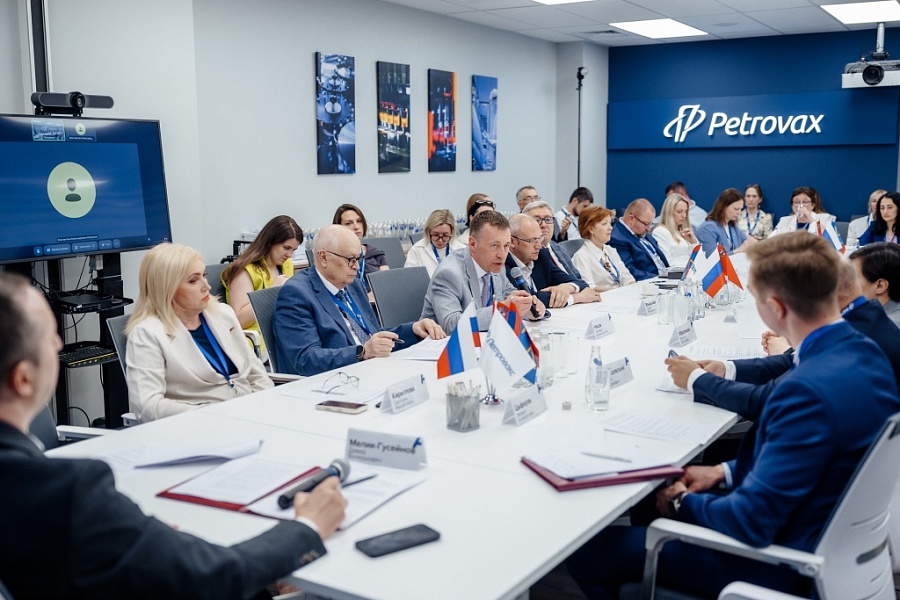
Today, the Russian pharmaceutical industry is capable of producing original biotechnological medicines to help meet the needs of the Russian healthcare system in the fight against cancer. However, the path from manufacturing such medicines to reaching individual patients can take years. The main reason is the long wait for inclusion in clinical guidelines and the compulsory health insurance system. Improving regulatory mechanisms could help address this challenge. These issues were discussed by leading experts at the roundtable "Improving Access to Innovative Cancer Therapies in Russia," held at the manufacturing complex of Petrovax Pharm.
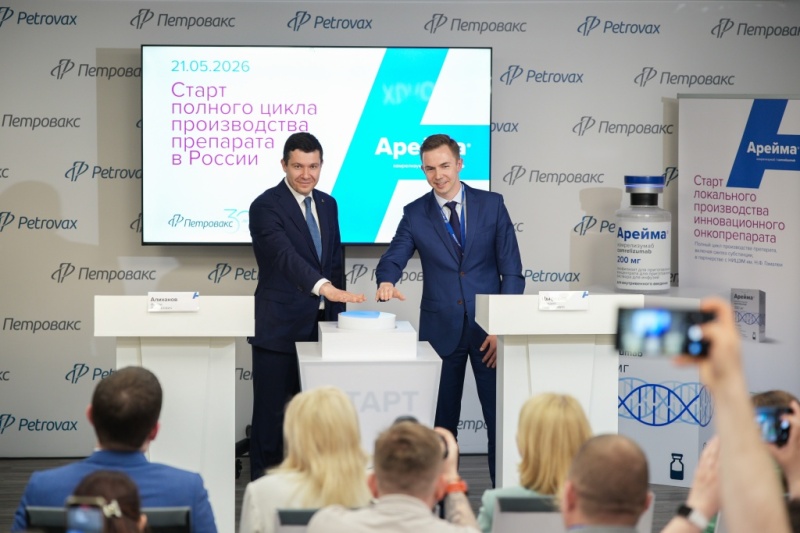
The Russian pharmaceutical industry is gradually moving from the production of generics to the development of innovative original products for the treatment of socially significant diseases, in line with the objectives of Russia’s healthcare development strategy and the national project "Long and Active Life." One such breakthrough was the launch of full-cycle production of Russia’s first immuno-oncology medicine Areima® (INN: camrelizumab) for the treatment of esophageal, nasopharyngeal, and lung cancers. The launch took place in the Moscow Region on May 21, with the participation of Anton Alikhanov, the minister of industry and trade.
The medicine was developed in close cooperation with Russian science — the N. F. Gamaleya National Research Center of Epidemiology and Microbiology — and offers significant advantages compared with foreign analogues. Launching production of such a medicine in Russia will help substantially reduce costs and improve access to life-saving therapy for Russian patients.
"The Russian pharmaceutical industry is bringing new medicines to the market, although until recently these were mainly generics and biosimilars. Now, however, innovative medicines produced under a full-cycle model have emerged, which is of enormous importance for the country’s pharmaceutical security. Domestic medicines are more cost-effective and can be produced without disruption in the absence of logistics problems; therefore, the development of our own innovative manufacturing must be strongly supported,"
said Konstantin Kokushkin, chief external clinical pharmacologist and director of the Scientific and Practical Center for Clinical and Economic Analysis of the Ministry of Health of the Moscow Region.
"Over the past twenty years, we have witnessed a true breakthrough in medical treatment for malignant neoplasms. This has become possible thanks to advances in biotechnology, a deeper understanding of the molecular characteristics of tumors, and the mechanisms underlying the antitumor immune response. Immuno-targeted therapies have significantly improved both immediate and long-term treatment outcomes and, in a number of indications, have made it possible to increase survival in patients with advanced cancer several-fold. In early-stage disease, we are increasingly able to speak of complete cure in patients at high risk of recurrence after radical surgery. The emergence of domestic immuno-oncology medicines opens additional opportunities to study new combination treatment approaches in clinical trials at the national level — which is fundamentally important for both physicians and patients,"
said Dmitry Nosov, chairman of the Russian Society of Clinical Oncology (RUSSCO), head of the oncology separtment for antitumor therapy at the Central Clinical Hospital of the Administrative Directorate of the President of the Russian Federation, leading research fellow at the S. P. Botkin Moscow Multidisciplinary Clinical Center, and chief external oncologist of the Main Medical Directorate of the Administrative Directorate of the President of the Russian Federation.
Last year, camrelizumab was unanimously included by the Ministry of Health Commission in the Essential Drug List (EDL). However, until the medicine is included in clinical guidelines and other formulary lists, it cannot be incorporated into compulsory health insurance (CHI) tariffs or procured for all patients who need it.
"Sometimes it takes years for a medicine to be incorporated into the relevant formulary lists. We have developed the most affordable immunotherapy in the country, but physicians still cannot procure the domestic product for hospitals, so more expensive and less effective alternatives have to be purchased instead,"
said Mikhail Tsyferov, president of Petrovax Pharm.
Representatives of patient advocacy groups emphasized that ensuring access to innovative medicines for patients is critical for the development of the domestic pharmaceutical industry.
"In recent years, we have witnessed tremendous growth in Russia’s own pharmaceutical industry, which is both right and timely. However, innovative solutions must be accessible to patients. Meanwhile, we are seeing an acute situation with medicines that are not included in the Essential Drug List, other formulary lists, or the compulsory health insurance system — sometimes patients wait for them for months or even years. Bureaucratic barriers preventing life-saving medicines from reaching patients must be eliminated,"
said Irina Borovova, head of All-Russian public organization of assistance to patients "Association of cancer patients "Zdravstvuy!".
Lengthy regulatory procedures for innovative solutions create challenges not only for physicians and patients, but also for business development. Under such conditions, it is difficult to plan investment payback timelines and pursue new R&D projects.
Viktor Cherepov, executive vice president of the Russian Union of Industrialists and Entrepreneurs (RSPP), noted that the main task today is to provide innovation manufacturers with investment guarantees and a clear implementation horizon. He reiterated that the development of a new molecule globally costs companies USD 1–4 billion, illustrating the need to protect companies’ rights and create optimal conditions for bringing therapies to patients.
"The Federation Council supports initiatives aimed at developing biotechnology and the Russian pharmaceutical industry. We must improve the legislative framework needed both for business and for people. What Russia is creating today is our pride,"
emphasized Svetlana Kirillova, member of the Federation Council Committee on Social Policy.
Participants of the roundtable expressed hope that the regulator will pay attention to the issues complicating access to medicines and propose ways to address them. One such solution, according to experts, could be the creation of a fast-track pathway for manufacturers of Russian innovations.