Only 9% of adults vaccinated against pneumococcus: physicians call for stronger pneumonia prevention
Russia is experiencing a steady rise in pneumonia incidence—one of the most common acute infectious and inflammatory diseases[1]. Experts identify pneumococcus as the leading cause of pneumonia[1]. Vaccination nearly halves the risk of developing pneumonia and helps reduce complications and mortality[2]. The importance of immunization and the need to raise public awareness were highlighted at the 15th International Online Congress of Internal Medicine Specialists.
Respiratory infectious diseases, including influenza and pneumonia, remain among the top ten causes of death worldwide[3]. According to Federal Service of State Statistics (Rosstat), in 2024 the incidence of community-acquired pneumonia in Russia reached 866.62 cases per 100,000 population, which is 1.7 times higher than in 2023 (498.02 cases) and more than double the long-term average of 416.7[4].
Pneumonia is dangerous due to its complications and long-term consequences. According to research conducted in the United States, one in three patients hospitalized with pneumonia dies within a year[5].
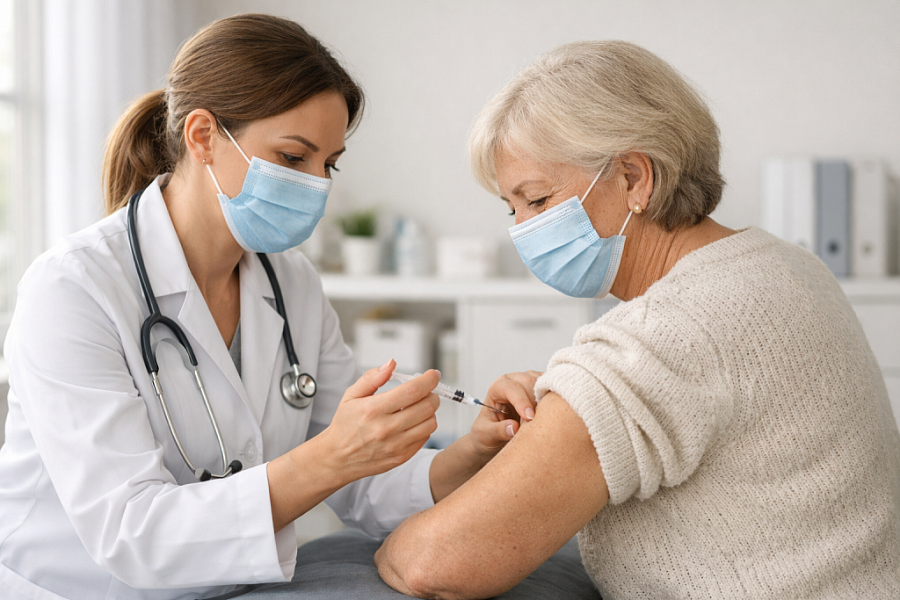
Vaccination against pneumococcal infection nearly reduces the risk of pneumonia by half[2]. It is recommended for high-risk groups, including: children aged 2 months to 5 years; residents of long-term care facilities; adults over 60 years of age; individuals with chronic diseases; military recruits; patients with comorbidities.
Pneumococcal vaccination is included in 20 clinical guidelines issued by the Ministry of Health of Russia. The recommendation extends beyond respiratory diseases—the vaccine is also indicated for patients with cardiovascular, endocrine, and other chronic conditions. For example, in patients with diabetes mellitus, vaccination reduces pneumonia incidence by 89.5%[7].
Despite existing recommendations, Rosstat data show that adult vaccination coverage in Russia remains within just 9%. Experts stress that the key to change lies in systematic patient education and strong support from the medical community.
Furthermore, according to data presented by S. I. Gryga, Chief External Epidemiologist of the Sevastopol Department of Health, in 2024–2025 Sevastopol achieved 54.9% pneumococcal vaccination coverage among people aged 60+ — an increase driven by educational activities for healthcare professionals.
Experts also noted the effectiveness of corporate vaccination programs as a practical tool to reduce morbidity and economic losses. According to V. N. Antonov, such programs enabled the Magnitogorsk Iron and Steel Works to reduce sick leave by 20%, as well as significantly decrease the number of COPD exacerbations, respiratory diseases, and cases of community-acquired pneumonia[8].
Vaccination effectiveness largely depends on adherence to recommended immunization schedules. Experts emphasized that the conjugate polysaccharide vaccine should be administered first (currently Prevenar® 13), as it triggers the formation of immune memory cells and provides long-term protection.
Pneumonia remains a major public health challenge; however, a substantial proportion of severe cases and complications can be prevented through timely pneumococcal vaccination. Expanding immunization coverage, sustained patient education, and the involvement of the medical community and employers in prevention programs can significantly reduce morbidity, hospitalizations, and mortality, improving both life expectancy and quality of life.
1 Zakharenkov I.A. et al. (2020). Etiology of severe community-acquired pneumonia in adults: results of the first Russian multicenter study. Terapevticheskii arkhiv (Therapeutic Archive). 92(1):36–42.
2 Bonten, Marc J M et al. “Polysaccharide conjugate vaccine against pneumococcal pneumonia in adults.” The New England journal of medicine vol. 372,12 (2015): 1114-25. doi:10.1056/NEJMoa1408544
3 World Health Organization. The top 10 causes of death. https://www.who.int/ru/news-room/fact-sheets/detail/the-top-10-causes-of-death
4 https://www.vedomosti.ru/society/news/2025/06/05/1115109-zafiksirovali-rost-zabolevaemosti?from=copy_text
5 Ramirez, Julio A et al. “Adults Hospitalized With Pneumonia in the United States: Incidence, Epidemiology, and Mortality.” Clinical infectious diseases: an official publication of the Infectious Diseases Society of America vol. 65,11 (2017): 1806-1812. doi:10.1093/cid/cix647 https://pubmed.ncbi.nlm.nih.gov/29020164/
6 Ignatova G.L., Avdeev S.N., Antonov V.N., Blinova E.V. Ten-year analysis of the effectiveness of pneumococcal vaccination in patients with chronic obstructive pulmonary disease. Pulmonologiya (Pulmonology). 2023;33(6):750–758. https://doi.org/10.18093/0869-0189-2023-33-6-750-758
7 Huijts, Susanne M et al. “Post-hoc analysis of a randomized controlled trial: Diabetes mellitus modifies the efficacy of the 13-valent pneumococcal conjugate vaccine in elderly.” Vaccine vol. 35,34 (2017): 4444-4449. doi:10.1016/j.vaccine.2017.01.071
8 Antonov V.N., Ignatova G.L., Blinova E.V., Grebneva I.V., Rodionova O.V., Domashenko M.A. Potential for reducing exacerbations in patients with chronic obstructive pulmonary disease at a large industrial enterprise. Respiratory Medicine. 2025;1(2):66–70
A turning point in the fight against osteoporosis: new medicines expand treatment access