A turning point in the fight against osteoporosis: new medicines expand treatment access
In Russia, modern osteoporosis care is becoming more accessible, addressing a disease that is a key contributor to disability and mortality in older adults[1]. More than 10,000 patients are already receiving a Russian denosumab biosimilar. Experts note that contemporary treatment helps reduce fracture risk and is also associated with a 32% reduction in the incidence of type 2 diabetes[2].
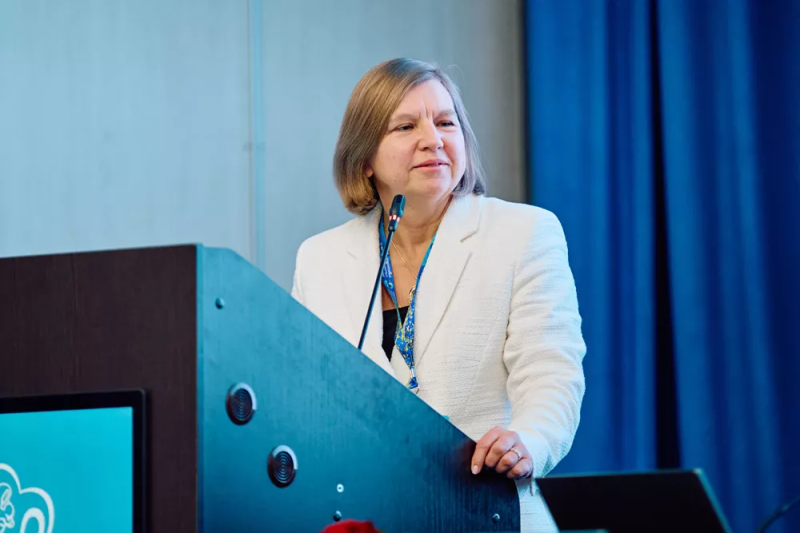
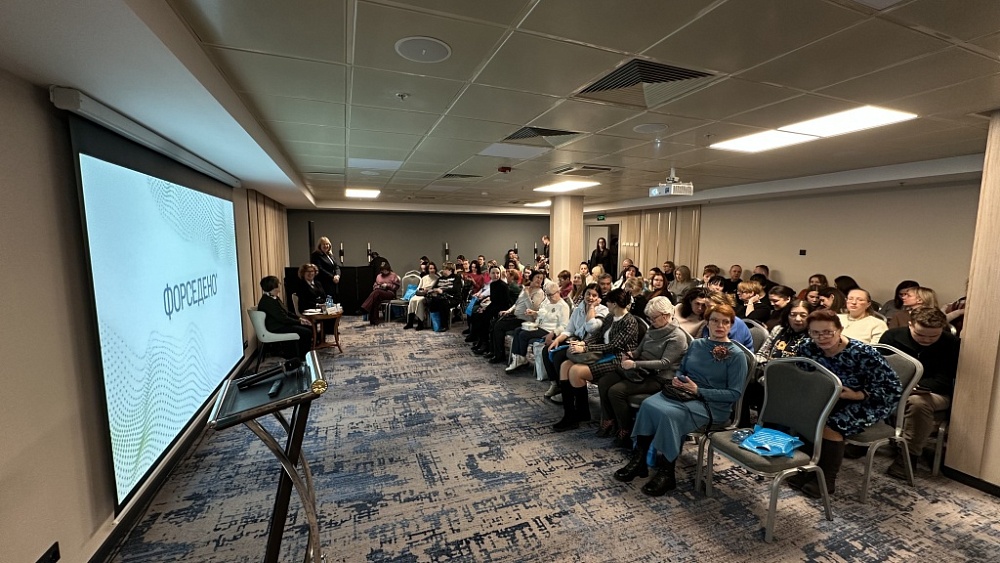
These issues were discussed at the roundtable "Turning Points in Osteoporosis Treatment" held in Moscow in early February.
More than 14 million people in Russia have been diagnosed with osteoporosis, and among individuals over 50, the condition affects one in three[3]. Risk increases with age; therefore, as the population continues to age, the importance of osteoporosis prevention and treatment grows every year[4]. The major consequence of the disease is fractures that occur under minimal stress—such as falling from standing height, lifting heavy objects, and sometimes even during coughing or sneezing. Any fracture doubles the risk of death, increases the likelihood of disability, and reduces patient independence[5]. After a hip fracture—one of the most severe osteoporosis complications—one in three patients becomes bedridden, and only 9% regain their previous level of mobility[6].
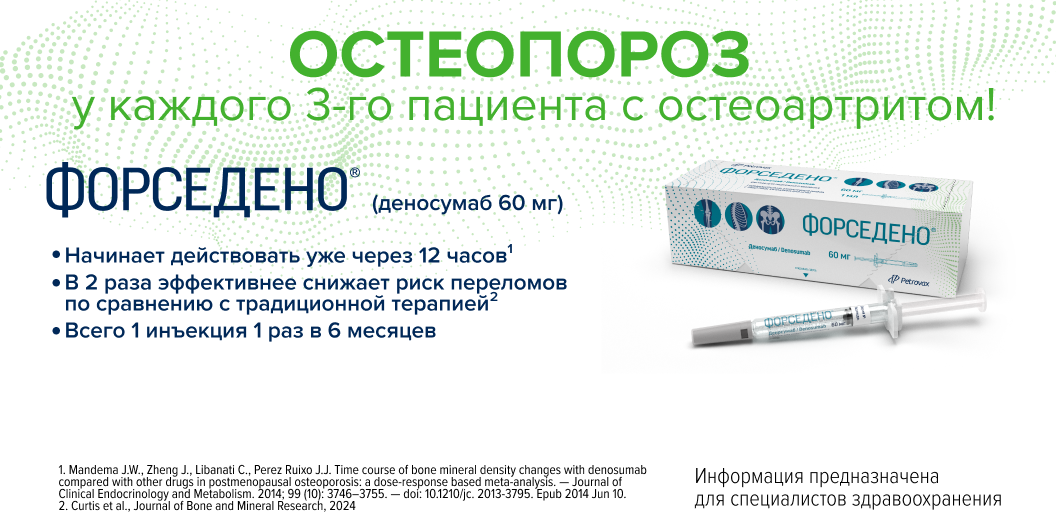
The cornerstone of osteoporosis therapy includes bisphosphonates (alendronate, zoledronate, ibandronate) and denosumab, a monoclonal antibody—based medicine. The authorization of Forsedeno®, a denosumab biosimilar, in 2025 has substantially improved access to treatment for patients with osteoporosis. More than 10,000 Russians are already receiving the drug.
Experts note that denosumab is used not only in primary osteoporosis, but also in secondary osteoporosis, which accounts for around 15% of all cases. The first category includes, for example, decreased bone mineral density (BMD) associated with menopause, as well as senile osteoporosis that develops with age. Secondary osteoporosis may be linked to the use of certain medicines, endocrine disorders, and immune-mediated diseases.
The evidence also points to additional benefits of denosumab therapy. For example, experts note that it is associated with a 32% reduction in the incidence of type 2 diabetes and a 46% reduction among patients with prediabetes[2].
Initiating this therapy at earlier stages of disease—before bone mineral density declines to —3.5—may enable faster recovery of BMD[8].
The participants emphasized that early detection of osteoporosis and timely initiation of modern pathogenetic therapy not only increase bone mineral density, but also significantly reduce the risk of fractures and related complications. Expanding access to effective biological therapies creates new opportunities for a personalized approach to treatment and prevention, especially in the context of population aging and the increasing prevalence of the disease.
More information about the disease is available at: https://osteoporosis.ru/
Background information
Forsedeno® (denosumab) is a protein and a fully human monoclonal antibody that inhibits the activity of RANKL (receptor activator of nuclear factor kappa B ligand)—a key molecule involved in osteoclast formation; osteoclasts resorb bone during bone metabolism by dissolving its mineral component. By blocking RANKL activity, denosumab suppresses osteoclast formation, function, and survival, thereby reducing the rate of bone resorption (degradation). This results in a rapid increase in bone mass in all skeletal sites and a reduced risk of vertebral and non-vertebral fractures.
Forsedeno® is supplied in pre-filled syringes and is indicated for the treatment of:
• osteoporosis in postmenopausal women and osteoporosis in men at increased risk of fractures;
• bone loss associated with reduced testosterone levels due to surgery or drug therapy in men with prostate cancer;
• bone loss associated with long-term systemic glucocorticosteroid therapy in adult patients at increased risk of fractures.
1 Marchenkova L.A., Makarova E.V., & Gerasimenko M.Yu. Prevalence of osteoporosis, associated fractures, and the level of awareness of the problem among patients undergoing medical rehabilitation. Lechashchiy Vrach (Attending Physician). 2020;(2):54–57 (in Russian)
2 Lyu, Houchen et al. “Denosumab and incidence of type 2 diabetes among adults with osteoporosis: population based cohort study.” BMJ (Clinical research ed.) vol. 381 e073435. 18 Apr. 2023, doi:10.1136/bmj-2022-073435
3 Sözen, Tümay et al. “An overview and management of osteoporosis.” European journal of rheumatology vol. 4,1 (2017): 46-56. doi:10.5152/eurjrheum.2016.048
4 Adami, Giovanni et al. “Osteoporosis in 10 years time: a glimpse into the future of osteoporosis.” Therapeutic advances in musculoskeletal disease vol. 14 1759720X221083541. 20 Mar. 2022, doi:10.1177/1759720X221083541
5 Bliuc, Dana et al. “Mortality risk associated with low-trauma osteoporotic fracture and subsequent fracture in men and women.” JAMA vol. 301,5 (2009): 513-21. doi:10.1001/jama.2009.50
6 Prokhorova E.A., Dreval A.V., & Marchenkova L.A. The relationship between osteoporosis, reduced quality of life, and psychoemotional disorders. Russian Medical Journal. 2012;(4):50–53 (in Russian)
7 Tang, Tao et al. “Efficacy of denosumab in treatment of osteoporosis in patients with rheumatoid arthritis: a meta-analysis of randomized controlled trial.” BMC musculoskeletal disorders vol. 26,1 450. 7 May. 2025, doi:10.1186/s12891-025-08688-8
8 Cosman, Felicia et al. “Goal-directed osteoporosis treatment: ASBMR/BHOF task force position statement 2024.” Journal of bone and mineral research : the official journal of the American Society for Bone and Mineral Research vol. 39,10 (2024): 1393-1405. doi:10.1093/jbmr/zjae119