Russian pharma needs a fast-track pathway for innovative medicines
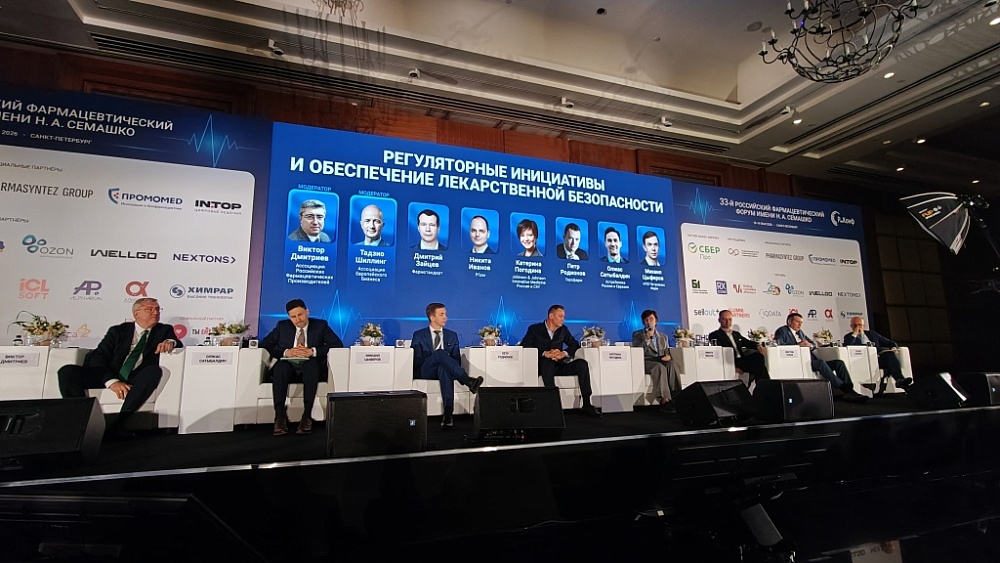
Russian pharmaceutical companies are actively investing in the development and localization of original innovative medicines. However, their market launch and subsequent accessibility are still complicated by regulatory hurdles. The current situation could be changed by a so-called regulatory fast-track pathway for fully localized medicines — e.g., by conducting the review of the marketing authorization dossier, inclusion in reimbursement/restrictive lists, and incorporation into clinical guidelines in parallel. Experts discussed this issue during the 33rd Semashko Russian Pharmaceutical Forum.
Providing patients with domestically produced medicines is one of the key priorities for the Russian pharmaceutical industry today. Moreover, companies now need not only to reproduce imported analogues, but also to bring unique original medicines to the market. This is especially relevant in areas where the share of domestic original medicines remains low — including oncology, rare diseases, and cardiovascular conditions — as well as for vaccines intended for mass use. However, lengthy sequential regulatory procedures delay the delivery of Russian innovations to patients.
A possible solution was proposed by Elena Maksimkina, Director of the Federal Center for Planning and Organization of Drug Supply for Citizens of the Ministry of Health of the Russian Federation:
At present, the path from registration to full access for vital medicines takes at least three years, and more often five to seven years. This makes investments in the development or full localization of innovative medicines less predictable and less likely to pay off, while also creating uncertainty for investors.
Already this year, Petrovax Pharm is ready to begin large-scale production of a vaccine against meningococcal infection, which protects the lives and health of children from the deadly disease meningitis and reduces its economic burden. However, the timeline for including the vaccine in the National Immunization Schedule continues to be postponed year after year.
In oncology — currently one of the top priorities for the healthcare system — many patients also do not gain access to innovative therapy because of lengthy regulatory processes, while companies are unable to reinvest funds into their next developments.
Simplifying and accelerating regulatory procedures for domestic manufacturers would both save public funds and allow Russian companies to invest more confidently and actively in the development of new medicines. In addition, according to the Forum experts, it is important to legally define the concept of an innovative medicinal product manufactured in Russia under a full-cycle model and to evaluate it separately, taking into account its therapeutic value and pharmacoeconomic profile.
In addition, as Elena Maksimkina noted, the new Strategy for Drug Supply to the Population, which is being developed to cover the period up to 2040, should take into account the expansion of centralized procurement for certain categories of medicines, such as orphan medicines, and include all necessary decisions to ensure the full implementation of the National Immunization Schedule in preventing vaccine-preventable diseases. According to her, access to other medicines should be improved through the introduction of a drug reimbursement system.
Forum experts emphasized that today the Russian pharmaceutical industry is not only seeking to respond to current challenges, but is also looking for novel pathways for innovative development. At the same time, the efforts of the state and business should be focused on achieving a single goal: ensuring that patients have access to effective and affordable medicines.
Iron deficiency in patients with chronic diseases: how to choose safe correction strategies?