Measures to accelerate market access for innovative medicines discussed at SPIEF
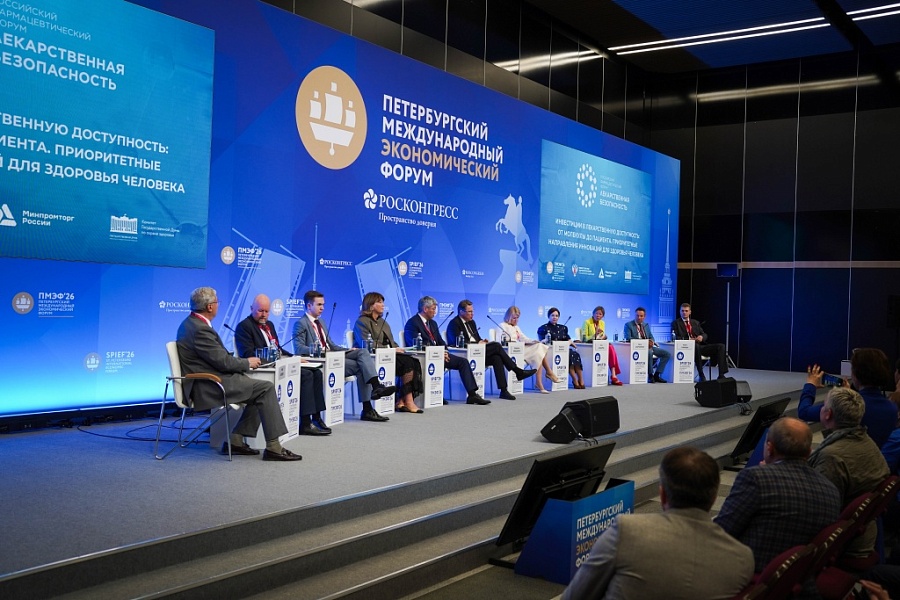
The development and production of innovative medicines are among the key priorities of the Russian Pharmaceutical Industry Development Strategy through 2030. The question of how to accelerate the introduction of innovative medicines, achieve technological leadership in pharmaceutical innovation, ensure Russian patients have access to high-quality and affordable domestically produced therapies, and maintain competitiveness in international markets was discussed during the St. Petersburg International Economic Forum (SPIEF 2026).
Over the past 25 years, the Russian pharmaceutical industry has undergone a remarkable transformation. Having initially focused on manufacturing generic versions of essential medicines, pharmaceutical companies are increasingly moving toward the development and production of original innovative products. Nevertheless, foreign manufacturers still account for approximately 90% of government procurement of innovative medicines.
Sergey Glagolev, Deputy Minister of Health of the Russian Federation, noted that both the regulatory framework and the capabilities of the domestic pharmaceutical industry now make it possible to manufacture «everything currently available on the global pharmaceutical landscape.» However, he emphasized that the challenge today is to increase the average value generated by the Russian pharmaceutical sector not through medicine price indexation, but through the growth of the innovative segment. In this regard, the industry faces a challenge related to ensuring predictable demand. According to the Deputy Minister, incentives and alternative mechanisms to support demand are needed to make investment in innovation more attractive.
Today, successful approval of an innovative domestic medicine in Russia is not the end of the journey for investors but only the beginning. The path from marketing approval to broad patient access may take three to five years. Such timelines reduce both industry and investor interest in innovative projects. Rapid market access is particularly critical for companies whose business models depend primarily on the domestic market.
In particular, Mikhail Tsyferov, President of Petrovax Pharm, spoke about the barriers the company has encountered while implementing its biotechnology development strategy.
Ekaterina Priezzheva, Deputy Minister of Industry and Trade, also emphasized the importance of accelerating access to innovative medicines for patients.
Despite the growing interest of Russian pharmaceutical manufacturers in launching innovations, their number remains limited. According to Kirill Danishevsky, Vice President for Corporate Communications at Petrovax Pharm, only five fully Russian innovative medicines have been launched in the country over the past five years.
Another important factor is market predictability.
Experts emphasize that today the most effective way to support innovation is to accelerate market access. In particular, this involves introducing a fast-track pathway: immediate inclusion of fully Russian innovative medicines in clinical guidelines and compulsory health insurance (CHI) tariffs upon their inclusion in the Essential Drug List (EDL), especially when such medicines generate savings for the state budget. This could become a key driver of increased investment in innovation — investment that stimulates economic growth, strengthens the country’s scientific and technological potential, and supports technological sovereignty.
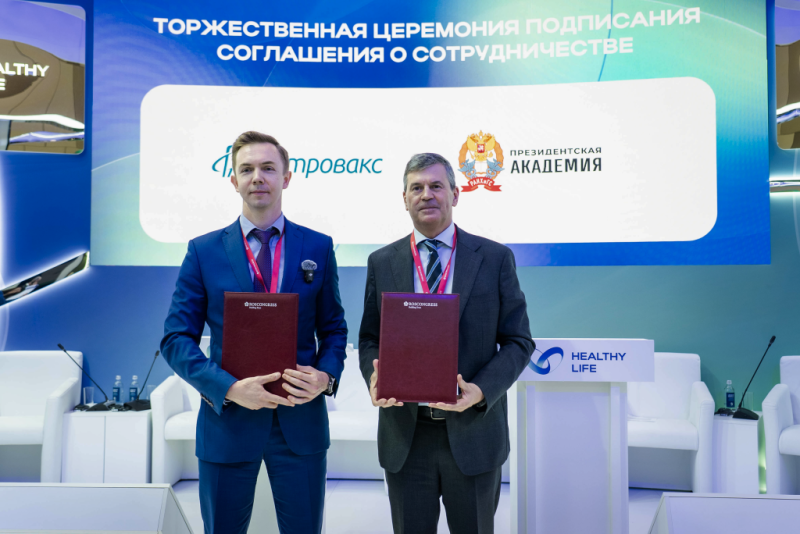
RANEPA and Petrovax Pharm to Assess the Pharmaceutical Industry’s Contribution to Russia’s Economic and Scientific Development