Petrovax Pharm announces support program for women with aggressive breast cancer at SPIEF
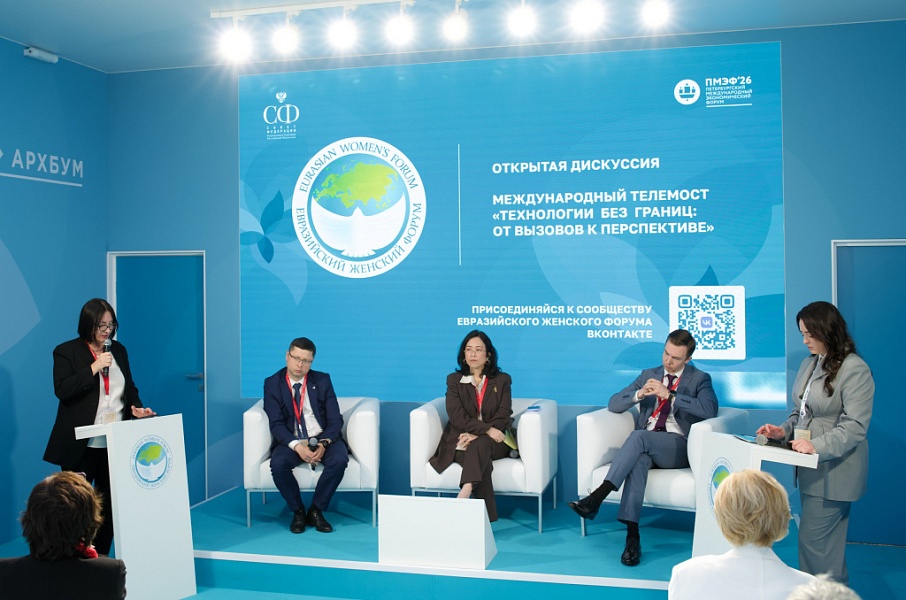
Russian patients will gain access to innovative treatment for triple-negative breast cancer (TNBC), one of the most aggressive forms of breast cancer. The initiative was announced by Mikhail Tsyferov, President of the biopharmaceutical company Petrovax Pharm, during the session «Technology Without Borders: From Challenges to Opportunities» at the St. Petersburg International Economic Forum (SPIEF 2026).
Breast cancer is one of the most common malignancies in women, accounting for 22.4% of all cancer cases[1]. Modern treatment approaches can significantly improve outcomes even in aggressive forms of the disease. This is particularly important for patients with triple-negative breast cancer (TNBC), one of the most challenging breast cancer subtypes affecting women of working age. Approximately 12,700 new TNBC cases are diagnosed annually in Russia. Of these, around 8,400 cases are diagnosed at stages II and III, when neoadjuvant immunotherapy may be prescribed to improve treatment outcomes[2]. Preoperative immunotherapy can substantially improve prognosis: approximately one in seven women achieves remission, and some patients may even avoid surgery altogether[3].
Currently, neoadjuvant treatment options available to Russian patients with TNBC remain limited. Chemotherapy and surgery are the only standard approaches available. Petrovax Pharm aims to address this unmet need through a new support program that will provide eligible patients with access to innovative therapy with camrelizumab (Areima®).

Camrelizumab, a next-generation original PD-1 inhibitor, is manufactured in Russia through a fully localized production cycle and is already approved for the treatment of nasopharyngeal, esophageal, and lung cancers. Approval of its indication for neoadjuvant treatment of TNBC is expected in August. However, in Russia, years often pass between regulatory approval and broad patient access to innovative oncology therapies. To bridge this gap, Petrovax Pharm is launching a program that will provide Russian women with TNBC access to camrelizumab before its widespread incorporation into the state-funded healthcare system. The medicine will be supplied based on specialist prescriptions and following approval by a medical review board.
The marketing approval for camrelizumab in Russia in 2024 heralded a major breakthrough in oncology, particularly in the treatment of nasopharyngeal carcinoma, where therapeutic options had previously been limited to chemotherapy. The medicine has already been included in the Essential Drug List (EDL) and in RUSSCO Practical Guidelines for esophageal cancer[4], nasopharyngeal cancer[5], and lung cancer[6].
In addition, an Expert Council unanimously supported the inclusion of camrelizumab in Russian clinical guidelines as a neoadjuvant immunotherapy option for patients with early-stage and locally advanced stage II–III triple-negative breast cancer[3]. This recommendation was based on the results of the international Phase III CamRelief trial, published in JAMA. The study demonstrated that adding camrelizumab to standard chemotherapy increased the rate of pathological complete response (pCR) from 44.7% to 56.8%, representing an absolute improvement of 12.2 percentage points.
According to pharmacoeconomic modeling, the use of camrelizumab as neoadjuvant therapy in patients with TNBC could potentially prevent up to 648 premature deaths annually and preserve approximately 21,000 life-years, equivalent to nearly 19,000 quality-adjusted life years (QALYs). The model also suggests potential savings of at least RUB 3.1–4.7 billion in expenditures by the federal and regional healthcare budgets through reduced treatment costs associated with metastatic disease[7].
Given the high prevalence of TNBC among women of working age, preventing recurrence and premature mortality also carries substantial socioeconomic value. According to the pharmacoeconomic analysis, treatment with camrelizumab could reduce GDP losses by an average of RUB 2.44 million per patient, based on a GDP-per-employed-person figure of RUB 2.87 million in 2025[7].
For thousands of Russian women, the launch of this program represents an opportunity to receive innovative medicine in a timely manner and maintain their quality of life. In addition, the initiative is expected to accelerate the integration of advanced treatment approaches into clinical practice and provide a foundation for the further development of early-access mechanisms for innovative medicines in Russia.
1 Breast Cancer. Clinical Guidelines of the Ministry of Health of the Russian Federation. 2 FDA D.I.S.C.O. Burst Edition: FDA approval of Keytruda (pembrolizumab) for high-risk early-stage triple-negative breast cancer 3 Proceedings of the Expert Council “Current Opportunities and Future Perspectives in the Treatment of Triple-Negative Breast Cancer: The Place of Camrelizumab in Russian Clinical Guidelines.” https://fsmj.ru/62215 4 Tryakin A.A., Besova N.S., Volkov N.M., et al. Esophageal and Esophagogastric Junction Cancer. RUSSCO Practical Guidelines, Part 1.1. Malignant Tumours. 2024;14(3s2):221–242. https://rosoncoweb.ru/standarts/RUSSCO/2024/2024-1_1-12.pdf 5 Bolotina L.V., Vladimirova L.Yu., Dengina N.V., et al. Head and Neck Tumors. RUSSCO Practical Guidelines, Part 1.1. Malignant Tumours. 2024;14(3s2):160–182. https://www.rosoncoweb.ru/standarts/RUSSCO/2024/2024-1_1-09.pdf 6 Laktionov K.K., Artamonova E.V., Breder V.V., et al. Non-Small Cell Lung Cancer. RUSSCO Clinical Guidelines, Part 1.1. Malignant Tumours. 2025;15(3s2):90–132. https://www.rosoncoweb.ru/standarts/RUSSCO/2025/2025-1-1-04.pdf 7 Pharmacoeconomic Rationale for the Use of Camrelizumab as Neoadjuvant Therapy for Triple-Negative Breast Cancer in the Russian Federation. https://fsmj.ru/62315