At the EAU Congress in London, experts presented data on the potential of Longidaza in restoring male fertility after COVID-19
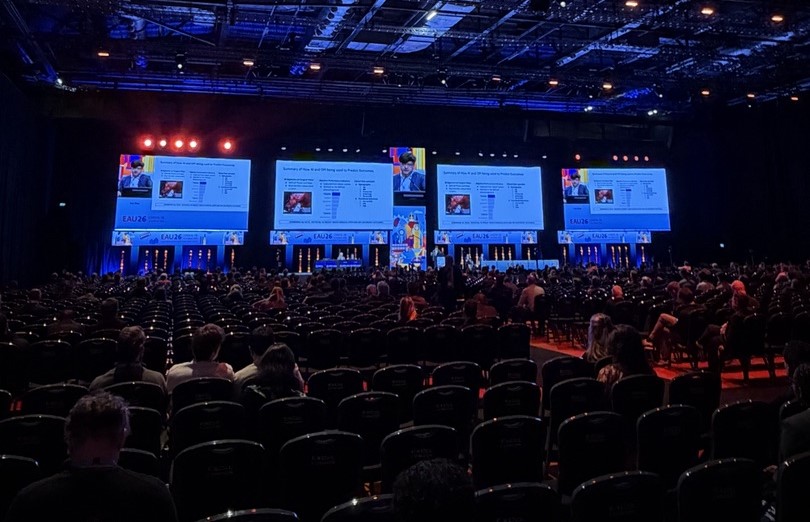
New data on the role of Longidaza® in the combination treatment of male infertility were presented at Europe’s largest annual urology event—the 41st Annual Congress of the European Association of Urology (EAU26) in London. The congress is the second-largest urology meeting worldwide and brought together more than 15,000 specialists from around the globe. Russian scientists highlighted how Longidaza®, a product developed in Russia and used as part of combination treatment, may help improve the reproductive health of men suffering from post-COVID complications.
Approximately 6% of men of reproductive age experience infertility, and in every second case this is an idiopathic form of the disease, the cause of which cannot be determined[1]. Infections, including previous COVID-19 infection, are among the factors proven to reduce fertility. In Russia, at least one in four men has experienced coronavirus infection[2].
According to new research by Russian scientists, a previous coronavirus infection may lead to structural tissue damage, reduced testosterone levels, and impaired fertility.
The study authors conducted a comprehensive assessment of male reproductive function. They examined structural abnormalities using electron microscopy, analyzed hormonal status (testosterone levels), measured sperm counts and performed immunological assays, evaluated testicular hemodynamics, and carried out morphological tissue analysis. The study was the first to combine electron microscopy of sperm, assessment of testicular blood flow, and biopsy to establish evidence of fibrosis.
Study participants were divided into four groups: men who suffered from infertility prior to COVID-19, patients who developed infertility after COVID-19, men who remained infertile after COVID-19, and those who had not been exposed to COVID-19 and had no fertility disorders. The control group included men with idiopathic infertility who had not had COVID-19s.
The study authors also presented a combination treatment protocol aimed at restoring reproductive function in patients with infertility. Such treatment regimen includes bovhyaluronidase azoximer, a medicines that targets fibrotic transformation; antioxidant support; and hormonal therapy (beta-hCG) to stimulate endogenous testosterone production and normalize sperm count. While at baseline all patients exhibited abnormal ejaculate parameters and fibrosis was present in 34.5%, one year after treatment initiation these rates had dropped significantly—to just 20% for abnormal parameters and 14% for fibrosis. According to the authors, these findings highlight the potential of a comprehensive therapeutic approach in the rehabilitation of men experiencing post-COVID sequelae.
The key outcomes of the study were a thorough characterization of COVID 19 related reproductive disorders and the development of an effective rehabilitation strategy. The authors believe that collecting history of COVID-19 infection should be an integral part of diagnostic workup in men with idiopathic infertility, and they view their preliminary experience with a multimodal rehabilitation protocol as a promising approach, considering the burden of the problem it addresses.
Background Information
Longidaza® (bovhyaluronidase azoximer) is an enzyme-based medicinal product with prolonged anti-inflammatory and antifibrotic effects, with more than 20 years of clinical use. It is used for the treatment and prevention of conditions associated with inflammation and connective tissue hyperplasia (fibrosis, adhesions)[3]. The drug is applied in urology, gynecology, pulmonology, surgery, dermatology, cosmetology, and rheumatology.
1 James, Emma R et al. “Genetic and epigenetic landscape of male infertility.” Trends in genetics: TIG vol. 41,10 (2025): 883-898. doi:10.1016/j.tig.2025.07.007 2 Muromtseva G.A., Shalnova S.A., et al. Proportion of individuals who had COVID-19 in 2020–2022 in the Russian population (based on the ESSE-RF3 study). Cardiovascular Therapy and Prevention. 2023;22(8S):3852. https://doi.org/10.15829/1728-8800-2023-3852 . EDN: XVAWIQ (in Russian). 3 Kulchavenya E.V., Shevchenko S.Yu., Cherednichenko A.G., Breusov A.A., Vinitskiy A.A. New opportunities for the use of hyaluronidase in chronic prostatitis. Urology. 2020;(3). https://dx.doi.org/10.18565/urology.2020.3.56-62 (in Russian)