Eurasian Society for Infectious Diseases includes Polyoxidonium® in new recommendations for the treatment of ARVI in children
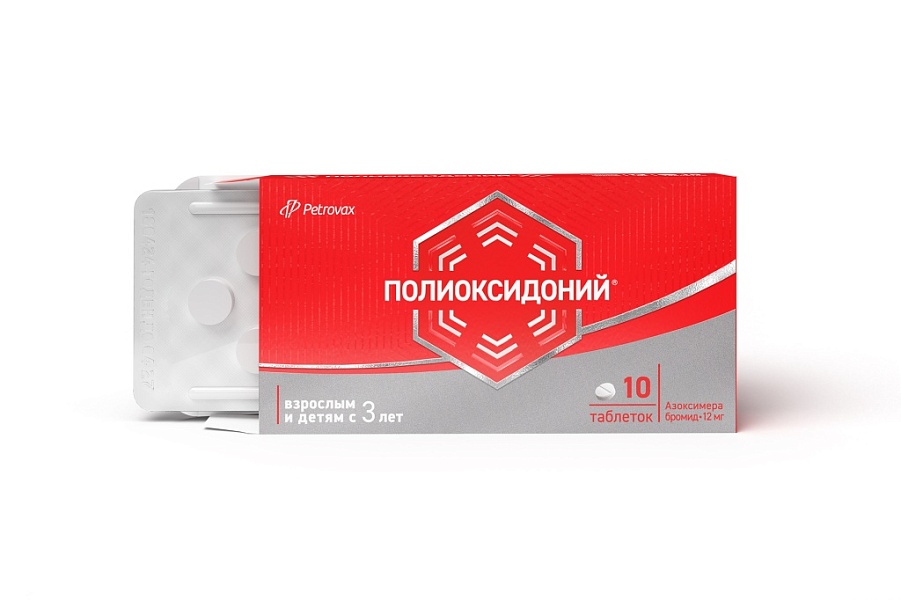
The Eurasian Society for Infectious Diseases (ESID) has published updated clinical guidelines titled "Immunotropic Treatment for Respiratory Infections in Children. Selected aspects"[1]. The document is intended for pediatricians, infectious disease specialists, and general practitioners, and defines current approaches to the use of immunotropic agents in acute respiratory viral infections (ARVI) in children. One of the medicines included in the updated recommendations is azoximer bromide (Polyoxidonium®), which is considered one of the medicines of choice for the treatment of intoxication syndrome and normalization of mucosal (local) immunity.
ARVI remains the most common infectious disease in childhood: annual incidence in Russia reaches 17,000–18,000 cases per 100,000 children. Even though most episodes are mild, in some patients the infection becomes prolonged or complicated[2].
The updated recommendations separately identify high-risk groups, including frequently ill children, patients with chronic ENT diseases and atopic conditions, as well as young children aged 6 months to 3 years, in whom standard symptomatic therapy may be insufficient.
For these patients, immunotropic treatment plays a particularly important role. Its goal is not to act directly on the virus, but rather to support and normalize the body’s immune response, reduce the risk of complications, and accelerate recovery. Such medicines may act either selectively on individual immune pathways or comprehensively, enhancing or suppressing the immune response depending on the clinical objective. In ARVI, this therapy is considered an adjunct to etiotropic treatment.
The document specifically focuses on medicines that affect mucosal immunity of the respiratory tract and systemic inflammatory responses. According to the recommendations, azoximer bromide (Polyoxidonium®) is considered one of the medicines of choice for the treatment of intoxication syndrome in children with ARVI, as well as for supporting local immunity of the respiratory tract. Its effects on mucosal immunity parameters are noted, including the production of secretory immunoglobulin A (sIgA) and lysozyme[3].
The medicine is also included in the federal clinical guidelines of the Ministry of Health of Russia for the treatment of ARVI[4] and in methodological recommendations of the Federal Medical-Biological Agency of Russia (FMBA)[5].
The recommendations present data on the use of azoximer bromide in children from high-risk groups, according to which its use is associated[7] with:
● shorter duration of ARVI episodes;
● reduced frequency of bacterial complications, including otitis media and sinusitis;
● reduced need for antibacterial therapy;
● maintenance of local immunity parameters during the acute phase of the disease.
The medicine helps suppress excessive formation of neutrophil extracellular traps (NETs), preventing damage to the respiratory epithelium and chronic inflammation. Optimization of the cytokine profile combined with activation of T and B lymphocytes ensures the timely development of a full adaptive immune response[8].
Implementation of immunotropic agents into clinical practice for management of ARVI can benefit high-risk children beyond shortening the duration of the acute episode, also reducing the rate of recurrent infections and decrease the need for antibiotics.
Background Information
Polyoxidonium® (azoximer bromide) is an original Russian medicinal product developed by Petrovax Pharm. It is widely used in clinical practice in Russia and abroad as part of combination therapy for ARVI and ENT diseases in adults and children from 6 months of age. Polyoxidonium® helps combat infection at the site of entry, the naso-oropharyngeal mucosa, shortens the duration of catarrhal symptoms and signs of intoxication, and improves well-being from the first days of treatment. The medicine is included in the Essential Drug List (EDL).
1 Immunotropic Treatment for Respiratory Infections in Children. Selected Issues (Recommendations for Practicing Physicians). St. Petersburg: Eurasian Society for Infectious Diseases (ESID); 2026. 89 p. https://ipoeasid.ru/wp-content/uploads/2026/04/Immunotropnaya-terapiya-ORVI.pdf 2 Hoy, Gregory et al. “The Spectrum of Influenza in Children.” Clinical infectious diseases: an official publication of the Infectious Diseases Society of America vol. 76,3 (2023): e1012-e1020. https://doi.org/10.1093/cid/ciac734 3 Kharit S.M., Galustyan A.N. Azoximer bromide — a safe and effective medicine for the treatment of acute upper respiratory tract infections in children: review of the results of double-blind, placebo-controlled, randomized phase II and III clinical trials. Pediatrics. Consilium Medicum. 2017;(2):55–61. 4 Clinical Guidelines of the Ministry of Health of the Russian Federation “Acute Respiratory Viral Infections (ARVI) in Adults.” Approved August 4, 2025. https://cr.minzdrav.gov.ru/preview-cr/724_2 5 Federal Medical-Biological Agency. Influenza and Other ARVI During the Ongoing COVID-19 Pandemic: Prevention and Treatment. 2022. https://fmba.gov.ru/upload/iblock/e94/ae892ecoprkk8gthhwl3lzr2etrhurv6/MR-FMBA-Gripp-i-ORVI_utv.pdf 6 https://medportal.ru/mednovosti/immunnaya-peregruzka-chto-privodit-k-zatyazhnomu-techeniyu-orvi/ 7 Bulgakova V.A. Immunomodulators for the prevention and treatment of acute respiratory infections: efficacy of azoximer bromide. Therapeutic Archive. 2014;86(12):92–97. 8 Pinegin B.V., Dagil Yu.A., Vorobieva N.V., Pashchenkov M.V. Azoximer bromide effect on the neutrophil extracellular traps formation. RMJ. 2019;1(*):2–6.