An original medicine for the targeted treatment of ovarian and HER2-negative breast cancer is authorized in Russia
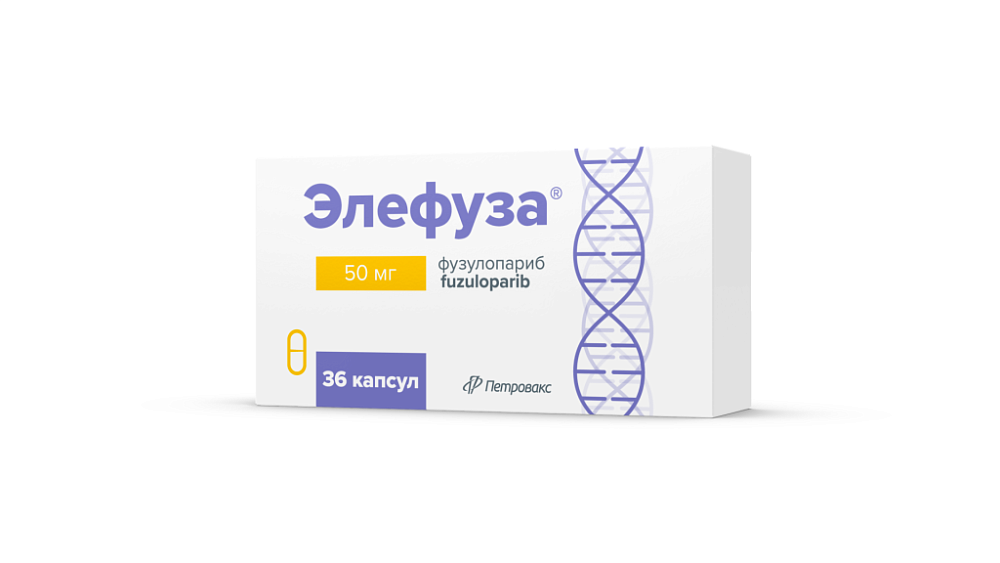
Russia’s Ministry of Health has approved Elefuza® (INN: fuzuloparib), an original medicine for the treatment of advanced epithelial ovarian cancer, fallopian tube cancer, primary peritoneal cancer, and metastatic HER2-negative breast cancer in women with BRCA1/2 mutations. The approval of this selective poly(ADP-ribose) polymerase (PARP) inhibitor expands treatment options and access to targeted therapy for these aggressive cancers. Petrovax Pharm will supply fuzuloparib in Russia and subsequently manufacture it locally.
One in five Russian women is diagnosed with breast cancer [1], and approximately 80% of tumors are HER2-negative [2]. Although innovative treatment options already enable effective management of many forms of the disease, certain subtypes, such as HER2-negative breast cancer with germline BRCA1/2 mutations, are aggressive and difficult to treat [3].
Ovarian cancer ranks among the ten most common cancers and leading causes of cancer-related death in women [4]. It is often diagnosed at an advanced stage and carries a high risk of recurrence [5]. Modern treatments can take tumor characteristics into account, including impaired DNA repair mechanisms, known as homologous recombination deficiency (HRD), which are identified in 58.5% of women with newly diagnosed advanced high-grade ovarian cancer in the Russian population [6].
“The approval of innovative targeted cancer medicines in Russia can significantly extend and improve the lives of people in their most active years. This is why Petrovax Pharm is committed to expanding its oncology portfolio. We focus on treatment options that can improve prognosis and quality of life in aggressive cancers most frequently diagnosed in women. Bringing fuzuloparib to the Russian market will significantly improve access to therapy. In doing so, we continue to contribute to protecting and improving the reproductive health of Russian women,”
Fuzuloparib is a selective PARP1/2 inhibitor that specifically targets PARP1 and PARP2 proteins and exhibits high lipophilicity (log P = 4.2) and affinity. The medicine inhibits PARP catalytic activity and traps PARP–DNA complexes, blocking the repair of DNA single-strand breaks and leading to the formation of double-strand breaks. In the presence of BRCA1/2 mutations or homologous recombination deficiency, this damage cannot be fully repaired, resulting in increasing genomic instability and tumor cell death. This mechanism, known as synthetic lethality, is a key approach in modern oncology.
“Advances in targeted therapy allow us to take tumor biology into account and select treatment based on the molecular characteristics of the disease. PARP inhibitors, including fuzuloparib, target a key DNA damage repair mechanism that becomes critical to tumor cells when BRCA gene mutations or other significant genetic defects in DNA repair are present. The approval of fuzuloparib expands the range of treatment options available to women,”
In Russia, fuzuloparib is approved as maintenance treatment for adult patients with advanced epithelial ovarian cancer, fallopian tube cancer, or primary peritoneal cancer who have responded to first-line platinum-based chemotherapy. The second approved indication is maintenance treatment for adult patients with platinum-sensitive recurrent ovarian cancer, fallopian tube cancer, or primary peritoneal cancer who have responded to platinum-based chemotherapy. The third indication is monotherapy for adult patients with HER2-negative metastatic breast cancer with a germline BRCA1/2 mutation who have previously received chemotherapy.
“Even after successful initial treatment, approximately 70% of patients with ovarian cancer experience recurrence within three years, and approximately 80% develop platinum resistance with repeated courses of chemotherapy. A key treatment goal is therefore to extend the period without progression for as long as possible and maintain disease control. Another option in the PARP inhibitor class expands the possibilities for maintenance treatment and gives physicians an additional tool for long-term disease control,”
The medicine’s registration dossier is supported by the results of three major Phase III clinical trials. In the first-line ovarian cancer setting, median progression-free survival reached 47.8 months in patients with a BRCA1/2 mutation versus 16.6 months in the placebo group, and 29.9 versus 11.1 months in the overall population, according to the FZOCUS-1 trial [7]. In recurrent disease, median progression-free survival was 15.7 versus 5.5 months, regardless of BRCA1/2 mutation status, according to FZOCUS-2 [8]. In HER2-negative metastatic breast cancer with a germline BRCA1/2 mutation, fuzuloparib outperformed chemotherapy: progression-free survival was 6.7 versus 3.0 months, and overall survival was 31.5 versus 21.5 months, according to the FABULOUS trial [9].
Elefuza® was developed by Petrovax Pharm in collaboration with Chinese partners. The next stage of the project includes localization of full-cycle production at the company’s facilities.
Background Information
Elefuza (INN fuzuloparib) is an original small-molecule selective inhibitor of poly(ADP-ribose) polymerase (PARP).
The medicine inhibits PARP catalytic activity and traps PARP–DNA complexes, blocking the repair of single-strand breaks and leading to the formation of double-strand breaks. In the presence of a BRCA1/2 mutation and/or homologous recombination deficiency (HRD), these breaks are not correctly repaired, genomic instability increases, and tumor cells die.
The medicine is approved in Russia for the following indications:
- Maintenance treatment of adult patients with advanced epithelial ovarian cancer, fallopian tube cancer, or primary peritoneal cancer who have achieved complete response or partial response to first-line platinum-based chemotherapy.
- Maintenance treatment of adult patients with platinum-sensitive recurrent ovarian cancer, fallopian tube cancer, or primary peritoneal cancer who have achieved complete response or partial response to platinum-based chemotherapy.
- Monotherapy in adult patients with HER2-negative metastatic breast cancer with a germline BRCA1/2 mutation who have previously received chemotherapy.
BRCA1 and BRCA2 are the best-known genes associated with a predisposition to breast cancer. They encode proteins involved in repairing damaged DNA. A mutation in one of these genes causes the cell to produce a nonfunctional protein, disrupting the DNA repair system. This increases the risk of accumulating genetic errors and malignant transformation of the cell.
HRD (homologous recombination deficiency) is a molecular genetic characteristic of a tumor that indicates an inability of cancer cells to repair DNA damage effectively.
References
1 Ministry of Health of the Russian Federation. Breast cancer: clinical guidelines. Approved by the Scientific and Practical Council of the Russian Ministry of Health. Electronic resource. (In Russian)
2 Poddubnaya I.V., Kolyadina I.V., Kalashnikov N.D. et al. A population “portrait” of breast cancer in Russia: an analysis based on a cancer registry. Journal of Modern Oncology. 2015;17(1):25–29. Article. (In Russian)
3 Bottosso M., Griguolo G., Trovò L. et al. Patterns of metastasis according to germline BRCA1/2 mutation status in patients with HER2-negative metastatic breast cancer. Breast Cancer Research. 2026;28:104. doi:10.1186/s13058-026-02374-w.
4 Ministry of Health of the Russian Federation. Ovarian cancer / fallopian tube cancer / primary peritoneal cancer: clinical guidelines. Approved by the Scientific and Practical Council of the Russian Ministry of Health. Electronic resource. (In Russian)
5 Chase D.M., Abdel-Sayed L. Delayed Diagnosis of Ovarian Cancer and the Association With Disease Outcomes. JAMA Network Open. 2026;9(3):e262374. doi:10.1001/jamanetworkopen.2026.2374.
6 Prevalence of homologous recombination deficiency among women with newly diagnosed ovarian, primary peritoneal, and/or fallopian tube cancer: the international HALO study. doi:10.1016/j.ijgc.2025.101645.
7 Wu L., Wang J., Li Q. et al. Fuzuloparib with or without apatinib as maintenance therapy in newly diagnosed, advanced ovarian cancer (FZOCUS-1): a multicenter, randomized, double-blind, placebo-controlled phase 3 trial. CA: A Cancer Journal for Clinicians. 2026;76(1):e70042. doi:10.3322/caac.70042.
8 Li N. et al. Fuzuloparib Maintenance Therapy in Patients With Platinum-Sensitive, Recurrent Ovarian Carcinoma (FZOCUS-2): A Multicenter, Randomized, Double-Blind, Placebo-Controlled, Phase III Trial. Journal of Clinical Oncology. 2022;40(22):2436–2446. doi:10.1200/JCO.21.01511.
9 Li H. et al. Fuzuloparib with or without apatinib in patients with HER2-negative metastatic breast cancer with germline BRCA1/2 mutations (FABULOUS): interim analysis of a multicentre, three-arm, open-label, randomised, phase 3 trial. The Lancet Oncology. 2025;26(12):1563–1574. doi:10.1016/S1470-2045(25)00523-6.
A unified care pathway and immune status: experts discussed new approaches to pneumonia management