A Russian medicine redefines treatment of male infertility
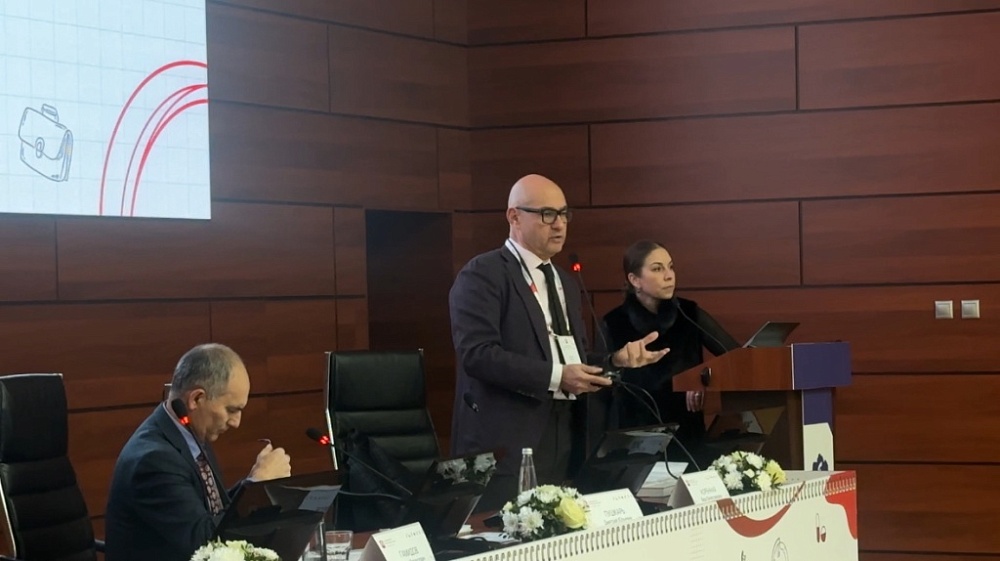
New study has shown that a Russian medicinal product helps restore the patency of the seminal tract in men with infertility. The study results were first presented at the "21st Moscow Urological School" conference, the most significant medical event for urologists in Moscow. The symposium "Infertility: A Comprehensive Approach and Interdisciplinary Discussion" organized with the support of Petrovax Pharm, provided a platform for opinion leaders to discuss the demographic situation in the country and strategies for preventing reproductive disorder.
The impact of male infertility on reproductive problems is often underestimated. According to the available statistical data, nearly every second case[1] of failure to achieve pregnancy is related to a male factor. Nevertheless, the primary burden of infertility examinations continues to fall on women.
One of the leading causes of male infertility is azoospermia. One in ten men facing infertility suffers from the obstructive form of azoospermia[2], where spermatogenesis is not impaired, but sperm do not enter the ejaculate, making fertilization impossible.
The addition of Longidaza® (bovhyaluronidase azoximer) at the second stage of the study to the postoperative treatment regimen in patients who had undergone microsurgical vasoepididymostomy increased the likelihood of spermatozoa appearing in the ejaculate three months after surgery. At this stage, therapy with the product was compared with standard postoperative management, which included antibiotics, analgesics, and anti-inflammatory drugs.
Chronic prostatitis is one of the disorders that can also affect male fertility. It has known to have proven negative impact on both sperm count and sperm motility[3]. This disease is often asymptomatic and is detected only during preconception checkup of a couple or when they seek medical advice for reproductive difficulties. Prostatitis is frequently of bacterial origin, and the formation of bacterial biofilms often limits the effectiveness of antibiotic therapy in such setting[4]. Bovhyaluronidase azoximer is an agent that can be effectively used in the treatment of prostatitis of any etiology, as it helps reduce inflammation, disrupt biofilms and increase the bioavailability of antibacterial therapy, also preventing fibrosis.
The data presented at the conference underscore the importance of a comprehensive, competent, in-depth, and timely approach to the diagnosis and treatment of male infertility and open up new opportunities to improve treatment outcomes. The use of an original Russian medicinal product that has demonstrated positive results in a number of common disorders not only expands the therapeutic armamentarium of urologists, but also strengthens interdisciplinary collaboration between specialists. In turn, this increases the chances for couples facing difficulties conceiving to achieve a desired pregnancy.
Background Information
Longidaza® (bovhyaluronidase azoximer) is an enzymatic drug with prolonged anti-inflammatory and antifibrotic action, with over 20 years of clinical use experience. The drug has become part of the practice of urologists across the country and is used to treat and prevent diseases associated with inflammation and hyperplasia of connective tissue (fibrosis, adhesions)[5]. Thanks to its anti-inflammatory and antifibrotic properties, bovhyaluronidase azoximer prevents the proliferation of connective tissue and helps reduce existing fibrotic foci, disrupt bacterial biofilms, and release bacterial cells from biofilms[6]. The medicinal product is used in urology, gynecology, pulmonology, surgery, dermatology, cosmetology, and rheumatology. In 2015, the WHO assigned the drug the international nonproprietary name (INN): bovhyaluronidase azoximer. The product is exported to the Eurasian Economic Union (EAEU) markets and is protected by a European patent as well as patents in the USA, South Korea, and India.
1 Dhikhirullahi, Opeyemi, and Zhibing Zhang. "Male infertility". Systems biology in reproductive medicine vol. 71,1 (2025): 416-438. oi:10.1080/19396368.2025.2548492
2 https://bjui-journals.onlinelibrary.wiley.com/doi/full/10.1002/bco2.493#
3 Qinyu, Zhang et al. "Chronic prostatitis and male infertility: association mechanism and research progress". World journal of urology vol. 43,1 599. 7 Oct. 2025, doi:10.1007/s00345-025-05964-z
4 García-Castillo, María et al. "Differences in biofilm development and antibiotic susceptibility among clinical Ureaplasma urealyticum and Ureaplasma parvum isolates". The Journal of antimicrobial chemotherapy vol. 62,5 (2008): 1027-30. doi:10.1093/jac/dkn337
5 Dereje G. Gete, Jenny Doust, Sally Mortlock, Grant Montgomery, Gita D. Mishra,Impact of endometriosis on women's health-related quality of life: A national prospective cohort study, Maturitas, Volume 174, 2023, Pages 1-7,ISSN 0378-5122, https://doi.org/10.1016/j.maturitas.2023.04.272.
6 E.V. Kulchavenya, S.Yu. Shevchenko, A.G. Cherednichenko, A.A. Breusov, A.A. Vinitskiy. New opportunities for the use of hyaluronidase in chronic prostatitis. "Urologiia" (Urology) 2020, №3. https://dx.doi.org/10.18565/urology.2020.3.56-62 (in Russian)
OsteoForce, a large-scale study, launches in Russia: a new step in osteoporosis management