Russian scientists prove effective management of iron-deficiency anemia with fewer adverse events
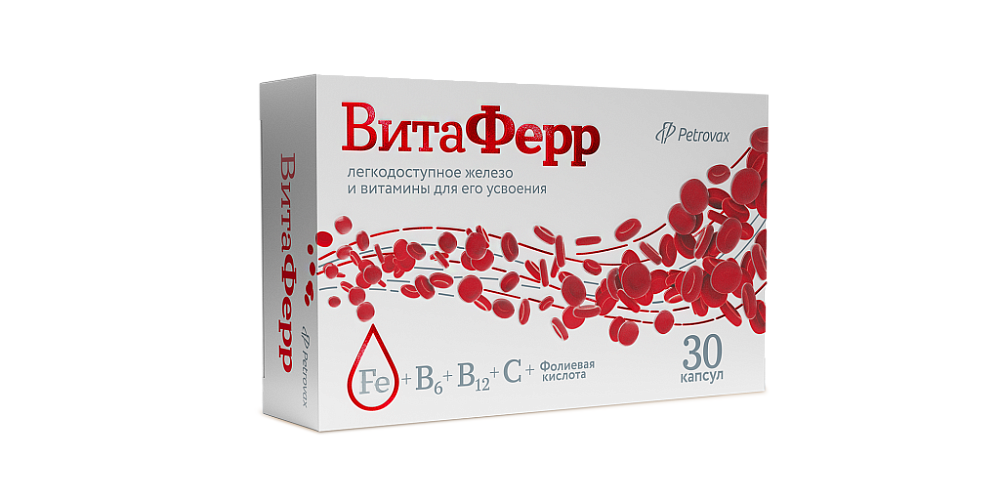
One in three people worldwide suffers from iron-deficiency anemia[1]. Iron supplements usually help manage this condition. However, poor tolerability sometimes leads patients to discontinue treatment[2]. Russian scientists have demonstrated that the Russian dietary supplement VitaFerr®, which contains iron bisglycinate, effectively alleviates anemia symptoms while causing significantly fewer side effects compared to iron sulfate[3].
Iron-deficiency anemia (IDA) is one of the most common diseases globally and a major cause of incapacity for work among populations[4]. IDA is more prevalent than deficiency of any other nutrient, affecting one out of every three people[1].
Iron is a vital micronutrient for the human body. It is a key component of red blood cells, which are essential for oxygen transport throughout the body. Iron deficiency typically manifests as weakness, severe fatigue, decreased productivity, shortness of breath or chest pain, and headaches[5]. Women are more likely than men to experience this condition, partly due to monthly menstruation, which leads to irreversible iron loss.
Iron supplements help compensate for this deficiency. However, their use may be associated with unpleasant side effects such as abdominal pain, nausea, vomiting, constipation, or diarrhea—symptoms that significantly reduce quality of life and often lead patients to discontinue necessary treatment[2].
Scientists have found that the chelated form of iron, particularly iron bisglycinate, are better tolerated and associated with fewer side effects. The first open-label, prospective, postmarketing study conducted at Bashkir State University under the supervision of Dr. habil. med. Bulat Akhatovich Bakirov demonstrated comparable efficacy between iron bisglycinate (dietary supplement VitaFerr®) and iron sulfate in achieving normal hemoglobin levels[3]. Notably, participants taking iron bisglycinate received six times less iron daily than the control group, resulting in 2.3 times fewer adverse events compared to the control group.
The study involved 120 women aged 18 to 49 who took iron supplements for two months. One group received 30 mg of elemental iron in the chelated bisglycinate form, along with 60 mg of vitamin C, B6, B12, and L-methylfolate (dietary supplement VitaFerr®), one capsule daily with meals. The other (control) group received two tablets daily of a product containing 100 mg of elemental iron as iron sulfate, along with 60 mg of vitamin C.
After 60 days, the majority of participants in both groups achieved the target hemoglobin level: 94.3% in the control group and 88.9% in the study group—no statistically significant difference was observed. Women in both groups reported a significant improvement in quality of life.
1 Kumar, Aditi et al. "Iron deficiency anaemia: pathophysiology, assessment, practical management." BMJ open gastroenterology vol. 9,1 (2022): e000759. doi:10.1136/bmjgast-2021-000759
2 Narita, Cindy & Prasetyo, Budi & Setyowati, Dewi. (2023). The effect of iron tablets' side effects on the level of compliance to consuming iron tablets in pregnant woman: A systematic review. World Journal of Advanced Research and Reviews. 17. 395-403. 10.30574/wjarr.2023.17.1.0037.
3 B.A. Bakirov, I.R. Nagaev, S.V. Donskov. Nutritional correction of iron metabolism in women of reproductive age: results of an open-label, prospective, postmarketing study with active parallel-group control // CardioSomatics. doi: 10.17816/CS677071
4 Iron deficiency anemia. Clinical Guidelines of the Ministry of Health of Russia https://cr.minzdrav.gov.ru/view-cr/669_2#doc_v
5 Iron-Deficiency Anemia. AMERICAN SOCIETY OF HEMATOLOGY. https://www.hematology.org/education/patients/anemia/iron-deficiency Access date 02 Apr 2025
Ministry of Health includes Polyoxidonium® in the federal clinical guidelines for ARVI treatment