Ministry of Health includes Polyoxidonium® in the federal clinical guidelines for ARVI treatment
On August 4, the Russian Ministry of Health approved an updated version of clinical guidelines for the treatment of acute respiratory viral infections (ARVI) in adults. One of the drugs for the treatment and prevention of ARVI included in the federal guidelines this year is Polyoxidonium® (azoximer bromide)[1].
Every year, up to 30 million people suffer from acute respiratory viral infections in Russia[1]. Adults experience 2–4 episodes of the disease annualy on average[1]. The high prevalence of respiratory viral infections requires a careful approach to their prevention and treatment.
Polyoxidonium® (azoximer bromide) is included in two sections of clinical guidelines, namely for etiotropic (antiviral) therapy, as well as for emergency and seasonal non-specific prevention of ARVI. The document notes that the drug has pronounced immunomodulatory activity and has a non-specific protective effect against a wide range of pathogens, and also shows antitoxic and antioxidant properties.
Previously, the drug was included in the guidelines of the Federal Medical and Biological Agency of Russia on prevention and treatment of influenza and other acute respiratory viral infections during the COVID-19 pandemic, the clinical practice guidelines of the Ministry of Health of Russia "Influenza in adults", temporary guidelines of the Ministry of Health of Russia on controlling COVID-19, temporary guidelines on treatment of ARVI during the COVID-19 pandemic.
Polyoxidonium® (azoximer bromide) is an original development resulted from many years of work by Russian scientists. Due to its special structure, the molecule successfully stimulates the production of interferons that activate antiviral protection and enhances the activity of NK cells[2] aimed to destroy infected cells and help to localize the process at an early stage.
The drug helps to cope successfully not only with viruses, despite the growing resistance of pathogens, but also with intoxication which can manifest itself with high temperature, headache, muscle weakness and can contribute to the development of complications.
Due to its high-molecular structure, azoximer bromide has pronounced detoxifying activity and is capable of influencing the pathogenesis of infectious diseases[3], unlike other drugs of this group. Polyoxidonium® binds toxin molecules and removes them from the body, and also suppresses the formation of neutrophil extracellular traps which are structures that, in case of excessive generation, support inflammation and damage tissues. This mechanism not only alleviates symptoms, but also reduces the burden on the immune system.
Over 24 thousand patients in total participated in clinical trials of Polyoxidonium[4]. The data obtained demonstrate that within a combination treatment for ARVI, the drug helps to cope with fever, sore throat, nasal congestion and other symptoms of a viral infection on average 1.3 days faster, improving well-being already in the first days of illness[5], [6], [7].
1 Clinical practice guidelines of the Ministry of Health of the Russian Federation "Acute respiratory viral infections (ARVI) in adults". Adopted on August 4, 2025. https://cr.minzdrav.gov.ru/preview-cr/724_2
2 NK cells, being natural killer cells, belong to special type of lymphocyte which is essential in innate immunity.
3 R. V. Petrov, R. M. Khaitov, A. V. Nekrasov, R. I. Attaulakhanov, N. G. Puchkova, A. S. Ivanova, B. V. Pinegin, K. F. Khamidullina, S. V. Dambaeva, and S. V. Klimova. Polyoxidonium: mechanisms of action and clinical relevance. Medical Immunology (Russia) 2, issue 3 (2000). https://elibrary.ru/item.asp?id=11608350
4 According to internal data from the manufacturer
5 V. P. Vavilova, A. M. Vavilov and A. Kh. Cherkayeva. Possibilities of modern treatment of acute respiratory viral infections in children. Pediatrics. Supplement to Consilium Medicum journal, issue 3 (2015). https://elibrary.ru/item.asp?id=24295061
6 V. P. Vavilova, O. S. Chernyuk, T. A. Karaulnova and N.I. Tarasova New ways of influencing local protective factors in children with pharyngeal lymphoid tissue ring pathology | #06/11 | Attending physician — professional medical publication for physicians. Scientific papers. Journal "Attending physician", issue 6 (June 2011). https://www.lvrach.ru/2011/06/15435224
7 V. P. Vavilova, N. K. Perevoshchikova, A. A. Rizo, S. A. Pavlenko, T. V. Filippova, et al. Application of Russian immunoregulator Polyoxidonium in children with pharyngeal lymphoid tissue ring pathologies//Pediatric Allergology and Immunology. 2005; No. 4; pp. 47-53.
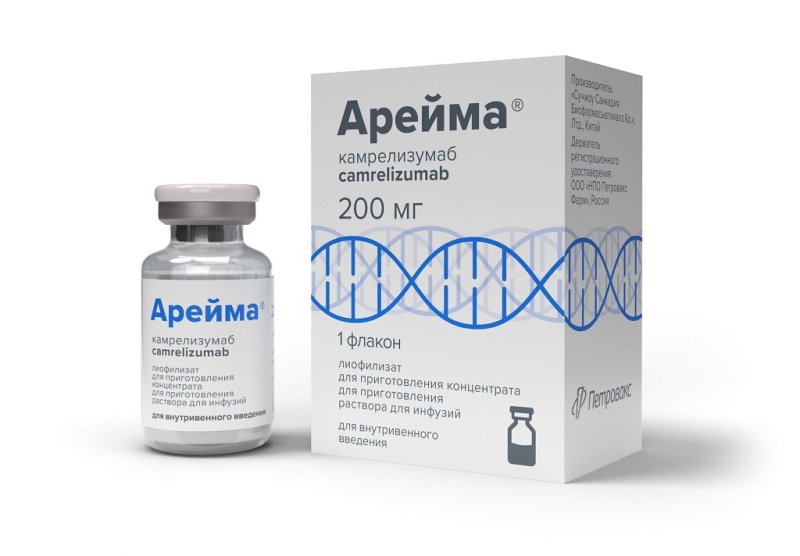
Authorities recommend including immuno-oncology drug Areima® for esophageal and nasopharyngeal cancer in VED