Immune overload: what leads to a prolonged course of acute respiratory viral infections
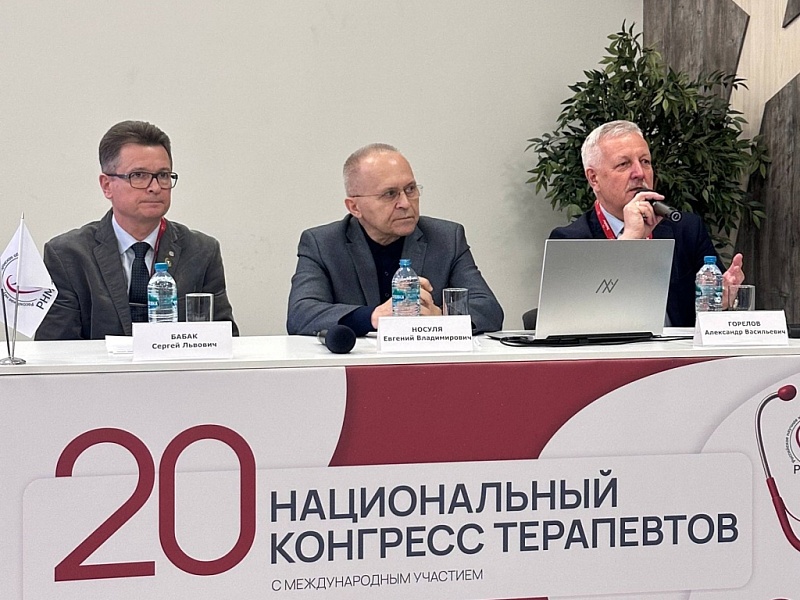
Respiratory viral infections dominate the infectious disease burden in Russia, accounting for up to 95% of all cases[1]. In recent years, experts have observed that acute viral respiratory tract infections (RTIs) are increasingly accompanied by complications. Effective treatment for acute viral RTIs and prevention of their serious consequences were among the key topics discussed at the 20th National Congress of Internists.
According to Alexander V. Gorelov, Doctor of Medical Sciences, Professor, Deputy Director for Research at the Central Research Institute of Epidemiology, patients are now more frequently experiencing protracted disease courses, pronounced intoxication, and bacterial superinfections such as acute sinusitis, bronchitis, and pneumonia.
He noted that effective management of acute viral RTIs should address three key targets: the causative pathogen, symptom relief, and immune system support. In 2025, Russian clinical guidelines for the treatment of acute viral respiratory tract infections (RTIs) were updated[2]. Among the key changes are stricter indications for antibiotic use, as well as the official inclusion of pathogenetic and immunomodulatory therapy in treatment regimens for certain patient groups, including individuals over 65 years of age.
Immunotropic therapy helps correct immune response disturbances and prevent complications. One such approach is the use of azoximer bromide, which has immunomodulatory and detoxifying effects. A meta-analysis of five studies involving 540 patients with acute viral RTI showed that this Russian-developed molecule helps reduce disease severity and shorten the duration of fever, muscle pain, and joint pain[3]. The drug prevents excessive inflammation by inhibiting the formation of neutrophil extracellular traps (NETs) and restores mucosal defense factors[4], thereby reducing the risk of chronic complications.
According to Evgeny V. Nosulya, Doctor of Medical Sciences, Professor, Head of the Teaching and Clinical Department at the L. I. Sverzhevsky Research Clinical Institute of Otorhinolaryngology, restoring the barrier function of the mucosa is a critical step in preventing complications.
A comprehensive approach is critically important in the treatment of infectious and inflammatory respiratory diseases, with the goal of accelerating the resolution of uncomfortable symptoms such as sore throat, nasal congestion, sinus discomfort, and other manifestations that reduce quality of life. A real-world practice study involving more than 16,000 patients with ENT infections demonstrated that the use of azoximer bromide allows clinicians to achieve favorable treatment outcomes in a wide range of infectious and inflammatory ENT conditions, including tonsillitis, rhinosinusitis, pharyngitis and others[8]. In particular, complete symptom resolution at the end of therapy was observed in 55% of patients with acute sinusitis and 60% of patients with acute tonsillitis[8].
Today, discussions about the course of acute viral RTIs and their consequences increasingly focus on the concept of NETosis — a process accompanied by the formation of neutrophil extracellular traps (NETs), which leads to tissue damage, exacerbates inflammation and creates conditions for complications. NETs are implicated to play an essential role in the development of intoxication, now recognized as a central factor in severe acute viral RTIs, and in persistent malaise even after apparent recovery[7].
The expert added that the use of azoximer bromide in patients with community-acquired pneumonia contributed to the reduction of both time spent in the intensive care unit and hospital stays[9].
The biopharmaceutical company Petrovax Pharm served as the official partner of the event. The company’s booth presented medicines for the prevention and treatment of acute viral RTIs, as well as developments in related therapeutic areas. In addition to the educational project POLYOXIDONIUM Talks, dedicated to modern approaches to treating acute viral RTIs, the company supported several scientific symposia. During the Congress, Petrovax Pharm also organized expert Q&A sessions, where leading clinicians discussed the most current topics in contemporary therapy and disease prevention.
Background information
Azoximer bromide is an original Russian medicinal product registered under the trade name Polyoxidonium®. It is used in clinical practice in Russia and abroad as part of the complex therapy of ARVI and ENT diseases in adults and children aged 6 months and older, and is included in the List of vital and essential medicines (Essential Drug List, EDL).
1 Vikulov G.Kh. New and recurrent respiratory viral infections: diagnostic and therapeutic algorithms. RMJ. Medical Review. 2018;8(I):5–11.
2 Clinical guidelines “Acute viral respiratory tract infections (RTI) in adults”.
3Karaulov A.V., Gorelov A.V. Use of azoximer bromide in the treatment of infectious and inflammatory respiratory diseases in children: a meta-analysis of controlled clinical trials. Journal of Infectology. 2019;11(4):31–41. https://doi.org/10.22625/2072-6732-2019-11-4-31-41
4Pinegin B.V., Dagil Yu.A., Vorobyeva N.V., Pashchenkov M.V. Effect of azoximer bromide on the formation of neutrophil extracellular traps. RMJ. 2019;1(II):42–46.
5Woods, Charmaine M et al. “The effect of nasal irrigation formulation on the antimicrobial activity of nasal secretions.” International forum of allergy & rhinology vol. 5,12 (2015): 1104-10. doi:10.1002/alr.21604
6Vavilova V.P., Vavilov A.M., Tsarkova S.A. Possibilities of modern non-specific prevention of novel coronavirus infection and acute respiratory infections of other etiologies. Pediatrics. Consilium Medicum. 2022;(3):213–222.
7Zhu, L., Liu, L., Zhang, Y., Pu, L., Liu, J., Li, X., Chen, Z., Hao, Y., Wang, B., Han, J., Li, G., Liang, S., Xiong, H., Zheng, H., Li, A., Xu, J., & Zeng, H. (2018). High Level of Neutrophil Extracellular Traps Correlates with Poor Prognosis of Severe Influenza A Infection. Journal of Infectious Diseases, 217(3), 428-437. https://doi.org/10.1093/infdis/jix475
8Svistushkin V.M., Nikiforova G.N., Eremeeva K.V., Dekhanov A.S., Kochetkov P.A. Possibilities of azoximer bromide in the treatment of patients with acute infectious and inflammatory diseases of the upper respiratory tract. Therapeutic Archive. 2023;95(11):951–957. doi:10.26442/00403660.2023.11.202488
9Zyryanov S.K., Butranova O.I., Ershov A.V., Manasova Z.Sh. Effectiveness of azoximer bromide in the treatment of hospitalized patients with moderate and severe community-acquired pneumonia. Medical Council. 2021;(18):106–117. https://doi.org/10.21518/2079-701X-2021-18-106-117
Petrovax named “Company of the Year” in the dietary supplements category at MedMen Awards 2025