Experts discussed prospects for detecting Fabry disease in newborns
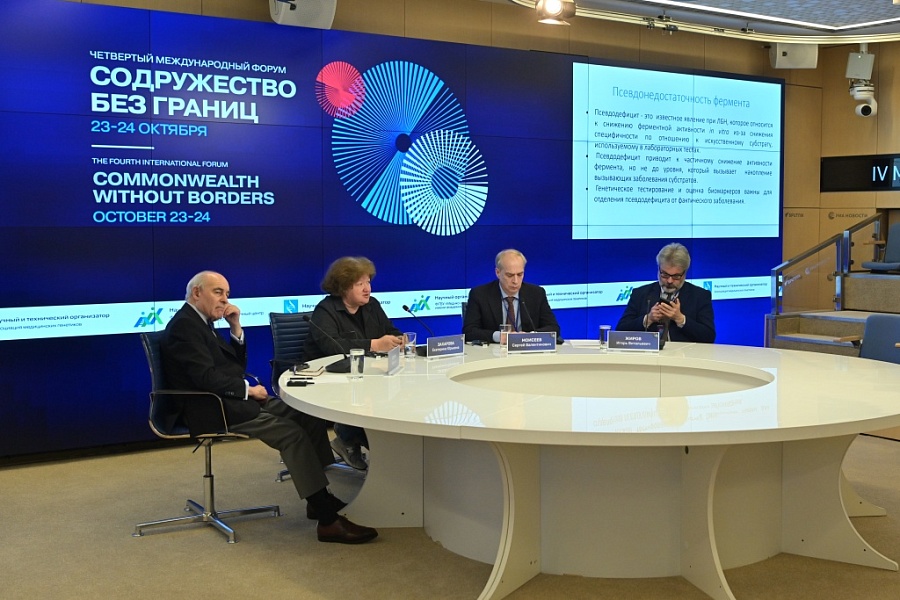
In 2026–2027, testing for Gaucher and Pompe diseases, mucopolysaccharidosis type I, Niemann—Pick disease types A/B, Krabbe disease, and Fabry disease may be added to the national newborn screening program. At the "Commonwealth Without Borders" forum, experts discussed the development of orphan medicine and the prospects for expanding neonatal screening in Russia. A highlight of the conference was the participation of U.S. professor Robert J. Desnick, one of the pioneers in the development of enzyme replacement therapy (ERT) for Fabry disease. He emphasized the importance of early screening for timely treatment and praised the Russian biosimilar Fabagal®.
According to Alexander Rumyantsev, Doctor of Medical Sciences, Professor, and President of the Dmitry Rogachev National Medical Research Center of Pediatric Hematology, Oncology and Immunology (NMRC PHOI) of the Russian Ministry of Health, domestic diagnostic capabilities — including neonatal screening — are developing rapidly, creating promising opportunities for the treatment of rare (orphan) diseases. Leila Namazova-Baranova, Doctor of Medical Sciences, Professor, and President of the Union of Pediatricians of Russia, highlighted the importance of early diagnosis and translational medicine in improving the quality of life of children with rare disorders.
Currently, neonatal screening in Russia covers 36 diseases. Active discussions are underway regarding the possible twofold expansion of the program, including the addition of lysosomal storage diseases. This became possible following the registration in Russia of a diagnostic test system capable of simultaneously detecting six diseases — Gaucher and Pompe diseases, mucopolysaccharidosis type I, Niemann—Pick disease types A/B, Krabbe disease, and Fabry disease — explained Ekaterina Zakharova, Doctor of Medical Sciences, Head of the Department of Molecular Mechanisms of Hereditary Metabolic Disorders at the Research Centre for Medical Genetics (RCMG). She also noted that neonatal screening for Fabry disease is particularly important, as the disorder often presents with complex and atypical clinical manifestations and is frequently diagnosed only at the stage of irreversible organ damage — primarily affecting the heart, kidneys, and vascular system.
Fabry disease is a rare hereditary disorder caused by a deficiency of the enzyme alpha-galactosidase, leading to severe kidney damage, heart failure, myocardial infarction, and stroke. Early screening is vital, as timely diagnosis and therapy significantly improve patients’ quality of life and survival.
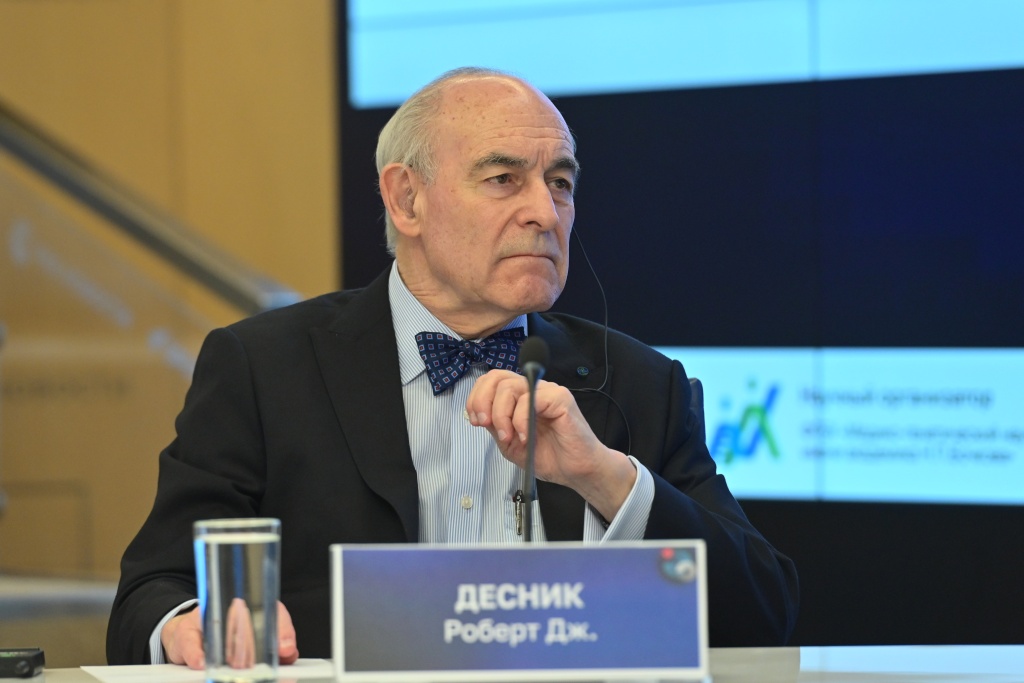
American geneticist Professor Robert J. Desnick, Chair of the Department of Genetics and Genomic Sciences at the Icahn School of Medicine at Mount Sinai in New York, noted that in the United States, testing for Fabry disease is included in the neonatal screening programs of many states. Initial diagnosis is based on analyzing dried blood spots to determine enzyme activity, followed by GLA gene sequencing for confirmation. This approach enables detection at the earliest stages and supports family-based cascade screening.
According to him, early initiation of treatment slows the progression of kidney, cardiac, and cerebrovascular involvement and reduces the risk of severe complications.
Treatment of Fabry disease aims to reduce the accumulation of harmful lipids in key affected tissues. The "gold standard" of therapy today is enzyme replacement therapy (ERT) based on agalsidase beta, the development of which was initiated by Professor Desnick’s research team.
Currently, several enzyme replacement therapies are used worldwide for Fabry disease: agalsidase alpha, agalsidase beta, and pegunigalsidase alpha. Agalsidase alpha was not approved by the U.S. FDA due to insufficient efficacy, which partly depends on the dosage of the active substance. As Professor Desnick noted, the standard dosage of agalsidase beta is 1 mg/kg, whereas that of agalsidase alpha is five times lower — 0.2 mg/kg. Moreover, experience gained during the forced switch of patients from agalsidase beta to agalsidase alpha (due to supply shortages of agalsidase beta) demonstrated disease progression in this group, including increases in lyso-Gb3 levels.
Pegunigalsidase alpha was registered twenty years later than agalsidase alpha and beta.
At present, three drugs for the treatment of Fabry disease are registered in Russia, including the Russian biosimilar of the original drug — agalsidase beta. Its dosage fully matches that of the reference product at 1 mg/kg, which is critically important for achieving therapeutic efficacy.
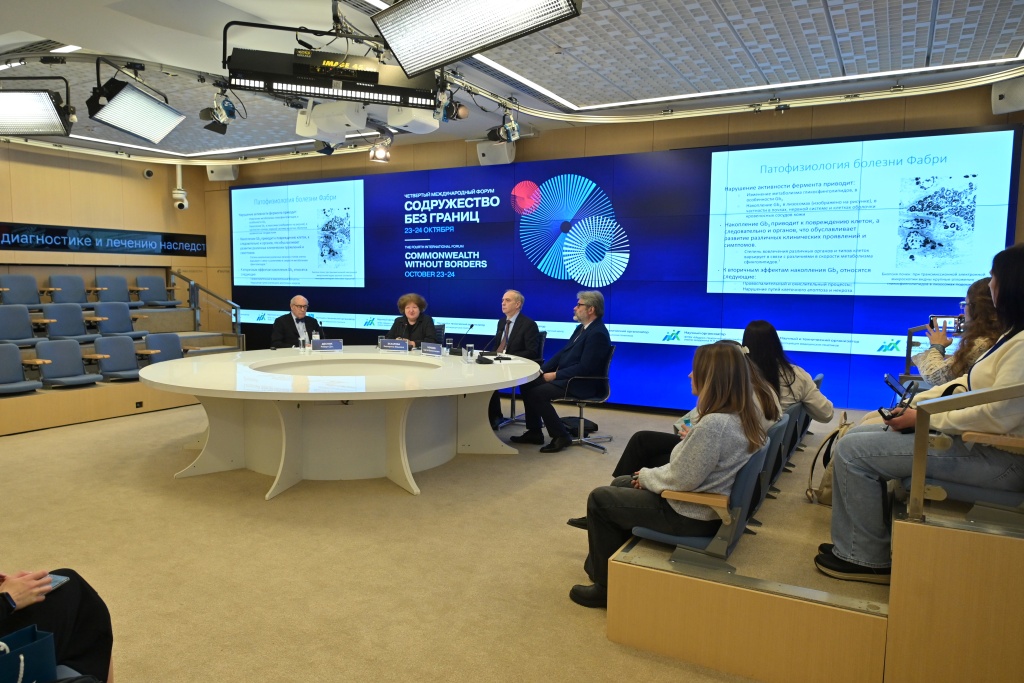
Neonatal screening will help identify more patients with Fabry disease and, as a result, expand the use of enzyme replacement therapy. The availability of the Russian biosimilar will make it possible to provide the necessary treatment to the maximum number of patients without additional burden on the healthcare budget.
Reference information
Neonatal screening is a population-based testing program for the early detection of congenital and hereditary disorders, performed by collecting a few drops of blood from a newborn’s heel. In Russia, the program was launched in 1993. Between 2006 and 2023, as part of the national Health project, screening covered five genetic disorders. In 2022, ten regional neonatal screening centers and one confirmatory diagnostic center were established across Russia. Since 2023, under the Healthcare national project, the program has been expanded to cover 36 diseases, including hereditary metabolic disorders, primary immunodeficiencies, and spinal muscular atrophy. The future development of neonatal screening in Russia focuses on further increasing the number of diseases included and improving the overall diagnostic system. In October 2025, Russian Minister of Health Mikhail Murashko announced that the Ministry plans to expand the national newborn screening program in 2026, potentially adding two or three more diseases to the list of screened conditions.
Product information
The medicinal product Fabagal® (INN: agalsidase beta) was approved in Russia in 2023 and is included in the national Essential Drug List (EDL).
The drug is indicated for enzyme replacement therapy in adults and children aged 8 years and older with Fabry disease. Agalsidase beta helps restore sufficient enzymatic activity for the hydrolysis and clearance of accumulated substrate from affected tissues — including the kidneys, heart, and central nervous system — thereby preventing progressive organ dysfunction.
Enzyme replacement therapy has been shown to reduce disability and extend patients’ economically active life expectancy by an average of 5.7 years.
In Russia, 350 patients with Fabry disease have been officially identified; however, the real number of patients may reach 5,800. Currently, 70 Russian patients with Fabry disease are receiving treatment with the domestic biosimilar.
The biosimilar is fully manufactured in Russia through a complete production cycle at the high-tech facilities of Petrovax Pharm, a biopharmaceutical company based in the Moscow Region. This is the first Russian project for the localization of an orphan drug, including the biosynthesis of the active substance from a cell line, implemented in partnership with the N. F. Gamaleya National Research Center for Epidemiology and Microbiology of the Russian Ministry of Health. The project exemplifies the successful implementation of the national strategy for developing innovative technologies and import substitution.
The product has been used in South Korea since 2014.