Pneumococcal infection in adults: high risk of complications calls for expanded vaccination coverage
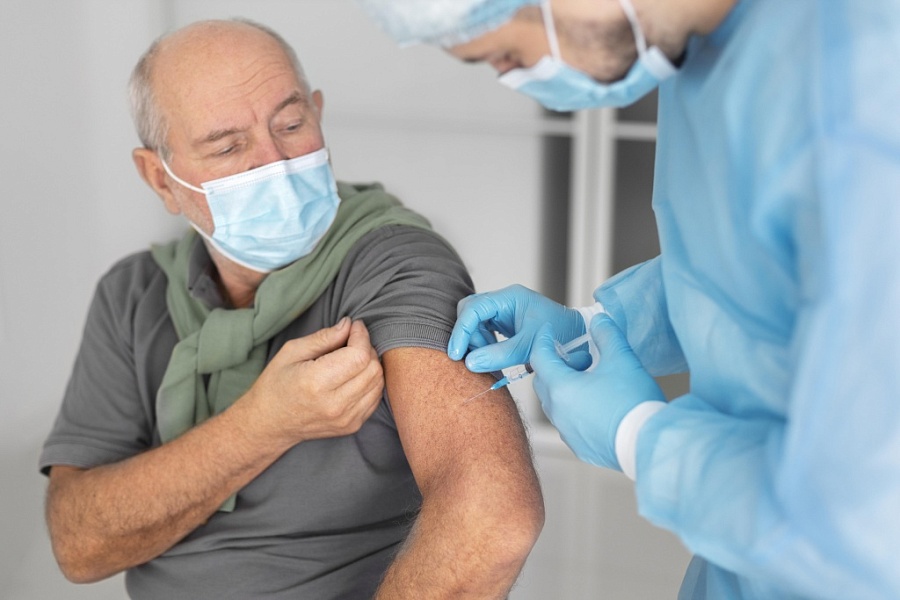
Pneumococcal infection remains one of the leading causes of severe complications and mortality among adults. Its burden can be reduced through vaccination; therefore, increasing immunization coverage, ensuring availability of modern conjugate vaccines, and improving patients’ willingness to be vaccinated are critically important. This was the conclusion reached by participants of the roundtable "The Role of Vaccine Prevention in Reducing Adult Mortality", held as part of the "Man and Medicine" forum.
The risk of severe pneumonia, complications, and death increases with age and in the presence of comorbidities. In older adults, the risk of death from pneumococcal infection increases 3—5-fold. In addition, nearly one in five patients who develop a cardiovascular event (myocardial infarction, heart failure, atrial fibrillation, stroke, deep vein thrombosis)[1] and one in ten patients with diabetes mellitus or chronic obstructive pulmonary disease[2] die within one month after having pneumonia. Within one year after the disease, nearly one in three patients dies[3].
The most effective way to reduce morbidity and mortality is vaccination against pneumococcal infection.
The first vaccine in immunization schedules for all patients should be a conjugate vaccine. It induces durable immunity without revaccination. A sequential regimen (polysaccharide vaccine followed by a conjugate vaccine) does not provide significant advantages over a single dose of a conjugate vaccine[4]. Polysaccharide vaccines induce short-term T-cell-independent immunity without immune memory: they do not work in children, do not reduce bacterial colonization, and do not generate herd immunity. Conjugate vaccines, by contrast, induce T-cell-dependent immunity with immune memory and long-lasting protection.
In patients with COPD, vaccination with a conjugate vaccine reduced the number of exacerbations by 3 fold, hospitalization rates by 3.6 fold, and mortality by 3.8 fold[5].
In Russia, routine childhood immunization against pneumococcal infection was introduced in 2014 as part of the National Immunization Schedule. Adults are vaccinated based on epidemiological indications[8]. Studies show that most chronic noncommunicable diseases increase the risk of pneumonia and its consequences; therefore, vaccination indications for adults need to be expanded.
Although vaccination against pneumococcal infection has already been included in 18 clinical guidelines, vaccination coverage among adults in Russia remains concerning: as of early 2025, coverage among people over 18 years of age stands at 10.5%, and among those over 60 years old at 16.5%, compared with the target level of 60%.
Since 2024, Russia has been implementing the federal project «Incident 9», aimed at reducing excess mortality and increasing life expectancy. As an example of effective regional practice, experts noted that in Sevastopol, within two years of the project’s implementation, 55% of residents over 60 years of age had been vaccinated.
This result was achieved through training of primary care physicians, who recommended vaccination to patients and explained its importance, the operation of mobile vaccination units, and the practice of simultaneous vaccination against influenza and pneumococcal infection.
Patient awareness campaigns conducted in Sevastopol and Blagoveshchensk also demonstrated high effectiveness: posters, brochures, and videos increased awareness of pneumococcal infection by 76%, while the proportion of physicians willing to recommend vaccination rose from 82% to nearly 100%.
Thus, pneumococcal vaccination is not merely protection against pneumonia but a critically important intervention with long-term positive health outcomes for patients. Consistent public outreach, physician education, and access to conjugate vaccines are key to reducing mortality and increasing life expectancy among high-risk patients.
1 Violi, Francesco et al. “Cardiovascular Complications and Short-term Mortality Risk in Community-Acquired Pneumonia.” Clinical infectious diseases: an official publication of the Infectious Diseases Society of America vol. 64,11 (2017): 1486-1493. doi:10.1093/cid/cix164 2 Bewick, Thomas et al. “Serotype prevalence in adults hospitalised with pneumococcal non-invasive community-acquired pneumonia.” Thorax vol. 67,6 (2012): 540-5. doi:10.1136/thoraxjnl-2011-201092 3 Ramirez, Julio A et al. “Adults Hospitalized With Pneumonia in the United States: Incidence, Epidemiology, and Mortality.” Clinical infectious diseases: an official publication of the Infectious Diseases Society of America vol. 65,11 (2017): 1806-1812. doi:10.1093/cid/cix647 4 Dunne, Eileen M et al. “Pneumococcal Vaccination in Adults: What Can We Learn From Observational Studies That Evaluated PCV13 and PPV23 Effectiveness in the Same Population?.” Archivos de bronconeumologia vol. 59,3 (2023): 157-164. doi:10.1016/j.arbres.2022.12.015 5 Ignatova G.L., Avdeev S.N., Antonov V.N., Blinova E.V. Ten-year analysis of the effectiveness of vaccination against pneumococcal infection in patients with chronic obstructive pulmonary disease. Pulmonology. 2023;33(6):750–758. https://doi.org/10.18093/0869-0189-2023-33-6-750-758 6 Bonten, Marc J M et al. “Polysaccharide conjugate vaccine against pneumococcal pneumonia in adults.” The New England journal of medicine vol. 372,12 (2015): 1114-25. doi:10.1056/NEJMoa1408544 7 Huijts, Susanne M et al. “Post-hoc analysis of a randomized controlled trial: Diabetes mellitus modifies the efficacy of the 13-valent pneumococcal conjugate vaccine in elderly.” Vaccine vol. 35,34 (2017): 4444-4449. doi:10.1016/j.vaccine.2017.01.071 8 ] Drapkina O.M., Avdeev S.N., Boytsov S.A. et al. Vaccination against pneumococcal infection as a tool for reducing morbidity and mortality among adult risk groups in the Russian Federation (Expert Council Resolution). Preventive Medicine. 2025;28(7):7–14. 9 Vaccination coverage against pneumococcal infection among adult risk groups in the Russian Federation. Epidemiology and Vaccine Prevention. 2024;23(6):13–23. https://doi.org/10.31631/2073- 3046-2024-23-6-13-23