Neoadjuvant immunotherapy shifts the treatment paradigm for triple-negative breast cancer
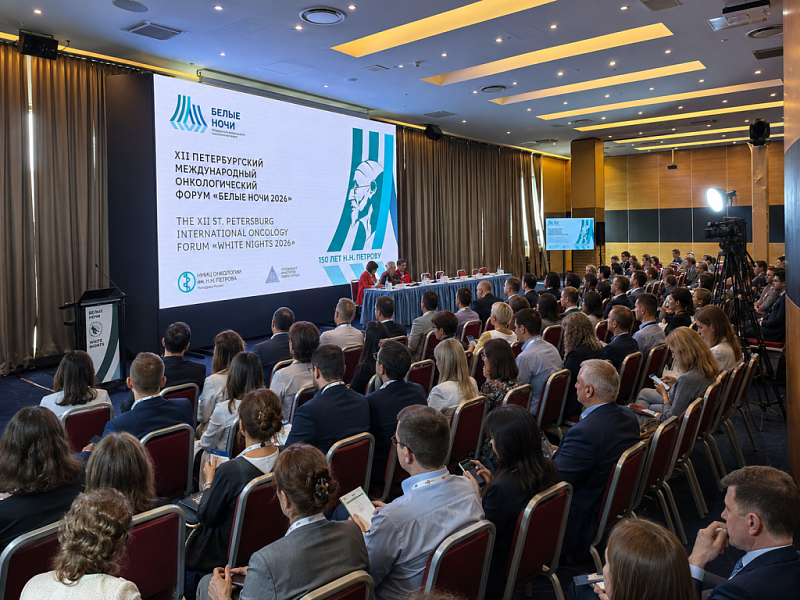
Modern immuno-oncology is opening up broad possibilities for treating the most aggressive malignant neoplasms. New data on the use of innovative drugs in breast cancer, esophageal cancer, and other oncological diseases were presented by leading Russian specialists at the international oncology congress “White Nights.”
Breast cancer (BC) remains the most common oncological disease in women. In 2024, 84,473 new cases were registered in Russia[1], up to 20% of which are triple-negative breast cancer (TNBC)[2]. This is the most aggressive molecular subtype of breast cancer, with a high risk of early recurrence and an unfavorable prognosis[2].
Today, global oncology is undergoing a shift in the treatment paradigm for TNBC: the emphasis is shifting toward neoadjuvant chemoimmunotherapy prior to surgery. According to ESMO recommendations, this approach is considered preferable for patients with stage T2 or higher tumors or with lymph node involvement.
Each year in Russia, TNBC is detected in 12,700 patients[3]. These are active young women with a mean age of 45 years. Preserving quality of life is critically important for them. Preoperative immunotherapy significantly improves the prognosis, making it possible to reduce the risk of tumor progression.
Until recently, drug treatment options for patients with TNBC were limited. Adding the immuno-oncology drug camrelizumab (a PD-1 inhibitor) to standard neoadjuvant chemotherapy may significantly expand the therapeutic possibilities.
The first data from the Russian study of the safety and efficacy of camrelizumab in combination with neoadjuvant chemotherapy (CAMELLA) were presented at the congress. The study demonstrated a manageable safety profile and high feasibility of the regimen in real-world clinical practice.
Camrelizumab promotes the activation of the patient’s immune mechanisms before surgery and the formation of an antitumor immune response, which may reduce the risk of recurrence. The full production cycle of the drug is localized in Russia by Petrovax Pharm, and its approval for the preoperative treatment of TNBC is expected in August 2026.
The results of the international CamRelief study, also presented at the congress, showed that the use of camrelizumab increases the rate of pathological complete response by 12.2 percentage points[4]. Given the proven association of pCR with the risk of recurrence, such data are potentially important for assessing long-term survival. In addition, the combination of camrelizumab with chemotherapy reduced the risk of disease progression or death by 36%, and the effect was maintained regardless of the level of PD-L1 expression and other clinical factors.
A promising therapeutic option for another type of breast cancer — HER2-positive metastatic BC — may be the drug pyrotinib, whose registration in Russia is expected this year. According to the PERMEATE study, the combination of pyrotinib with capecitabine demonstrated high activity against brain metastases: the objective response rate in patients without prior radiotherapy reached 74.6%, and the median progression-free survival was 13.6 months[5].
The experts also presented new data on the use of camrelizumab in other malignant neoplasms. In the ESCORT-1st study, in patients with locally advanced and metastatic esophageal squamous cell carcinoma, the combination of camrelizumab with paclitaxel and cisplatin increased the median overall survival from 12.6 to 15.6 months and reduced the risk of death by 30%[6]. Moreover, the treatment results were maintained regardless of the level of PD-L1 expression.
According to Alexey Tryakin, Doctor of Medical Sciences, Deputy Director for Research at the N.N. Blokhin National Medical Research Center of Oncology, camrelizumab has already proven effective in other localizations as well, including malignant neoplasms of the liver, lung, stomach, and nasopharynx. For the latter, camrelizumab has become the first and only immunotherapeutic option in Russia capable of significantly improving prognosis and overall survival of patients.
According to the congress participants, the introduction of modern immuno-oncology drugs opens a new chapter in the treatment of the most aggressive forms of cancer. Localizing the production of innovative solutions in Russia creates conditions for the faster adoption of global treatment standards and for expanding patients’ access to modern treatment.
1 Malignant Neoplasms in Russia in 2024. Ed. by A. D. Kaprin, V. V. Starinsky, A. O. Shakhzadova, N. Yu. Zolotarev. 2025. https://glavonco.ru/cancer_register/doc/Злокачественные%20новообразования%20в%20РФ%20(заболеваемость%20и%20смерность%20в%202024).pdf (in Russian). 2 Semiglazov V. F., Dzhelyalova M. A., Tseluyko A. I., Pesotsky R. S., Bessonov A. A., Semiglazova T. Yu. Neoadjuvant and post-neoadjuvant treatment of triple-negative breast cancer // Farmateka. 2020. Vol. 27. No. 11. P. 8–13. DOI: 10.18565/pharmateca.2020.11.8-13 (in Russian). 3 Ryazhenov V. V. Pharmacoeconomic rationale for the use of camrelizumab in the neoadjuvant therapy of triple-negative breast cancer in the Russian Federation. Meditsina (Medicine), 2026;14(2):64–72. DOI: 10.29234/2308-9113-2026-14-2-64-72 (in Russian). 4 Chen, Li et al. “Camrelizumab vs Placebo in Combination With Chemotherapy as Neoadjuvant Treatment in Patients With Early or Locally Advanced Triple-Negative Breast Cancer: The CamRelief Randomized Clinical Trial.” JAMA vol. 333,8 (2025): 673–681. DOI: 10.1001/jama.2024.23560. 5 Yan M., Ouyang Q., Sun T. et al. eClinicalMedicine, 2024;76. 6 He, Mingming et al. “Final analysis of camrelizumab plus chemotherapy for untreated advanced or metastatic esophageal squamous cell carcinoma: The ESCORT-1st trial.” Med (New York, N.Y.) vol. 5,9 (2024): 1137–1149.e3. DOI: 10.1016/j.medj.2024.05.008.
From pregnancy preparation to vaccination: experts outline priorities in children's health at the forum "Russia and the World: Trends in Healthy Longevity"