Double punch to cancer
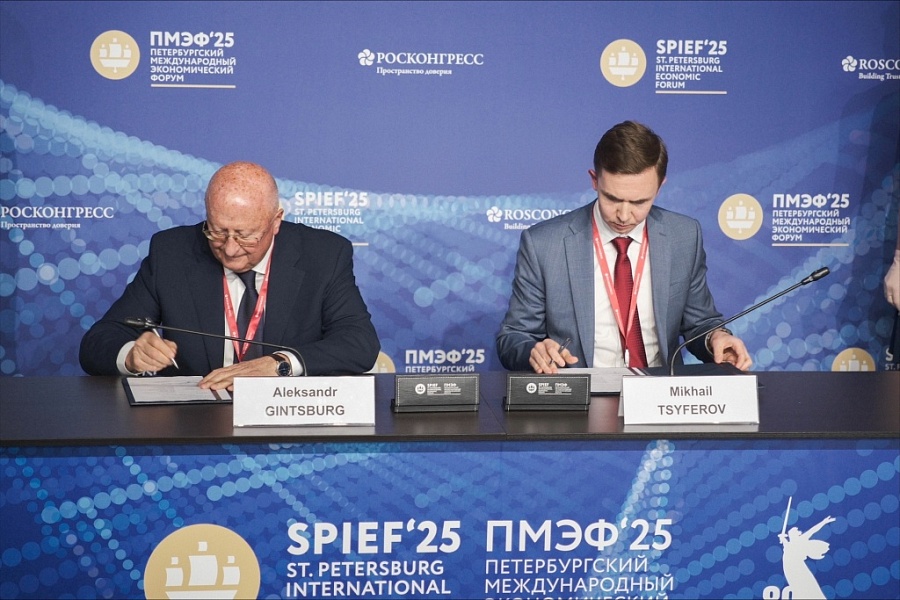
Moscow, June 18, 2025 — N. F. Gamaleya NRCEM and Petrovax Pharm gathered on the sidelines of the St. Petersburg International Economic Forum (SPIEF) to sign a memorandum of strategic cooperation. This effort is intended to enable collaborative scientific research in cancer-related issues. The first research project the companies aim to complete is to investigate the potential that the combination therapy presents when biotechnological medications based on mRNA technologies are used in conjunction with the immuno-oncology drug camrelizumab (Areima®).
Cancer remains a major challenge for medicine. Modern scientific achievements present options for both targeting tumor cells to eventually destroy them and also helping the body to combat cancer cells on its own. Areima® (camrelizumab), a checkpoint inhibitor that blocks the PD-1 receptor, was authorized in Russia last year. The drug has become a groundbreaking product capable of treating nasopharyngeal cancer. Until now, only chemotherapy was used to combat this type of tumor. Immunotherapy, such as camrelizumab, when combined with mRNA technology, has the potential to dramatically increase cancer treatment capabilities by more actively stimulating the immune response and targeting the malignant tumor.
A dedicated Scientific and Technological Center, established earlier this year, was set up specifically to create innovative mRNA-based drugs in Russia. 17 scientific organizations have joined this Center. N.F. Gamaleya NRCEM was chosen to lead this consortium.
Both companies plan to complete research that includes modeling immunotherapy regimens using checkpoint inhibitors (camrelizumab) as a basic therapy that improves the tumor microenvironment, a critical factor in increasing the efficacy of treatment with customized mRNA-based biotech drugs.
The first partnership experience that N.F. Gamaleya NRCEM and Petrovax Pharm had resulted in an extraordinary endeavor to transfer the substance cell line-based syntheses technology for the orphan drug and introduce a domestically-produced medicine Fabagal® as an option to treat Fabry disease in clinical practice.
Reference information
Areima® (camrelizumab) is an immuno-oncology drug, which was authorized in Russia as an agent to treat regional and metastatic esophageal squamous cell cancer in combination with paclitaxel and cisplatin as the 1st line of therapy, as monotherapy with progression after chemotherapy, as well as to treat recurrent metastatic nasopharyngeal cancer in combination with cisplatin and gemcitabine as the 1st line of therapy. The drug has undergone international clinical trials, including those in Russia. Camrelizumab has already been used in more than 300 thousand patients in clinical practice. The Russian Society of Clinical Oncology (RUSSCO) has already included camrelizumab in combination with gemcitabine and cisplatin in its Practical Guidelines as the most preferred first-line nasopharyngeal and esophageal cancer therapy regimen.The expert boards also recommended to include the new immuno-oncology drug in the Clinical Guidelines for Esophageal Cancer and Nasopharyngeal Cancer.
mRNA (messenger RNA) represents RNA molecules that encode protein molecules. mRNA molecules are essential components of any living cell because they serve as a link between the genetic information encoded in DNA and proteins, which perform the majority of the molecular functions required to ensure biochemical processes and the critical activity of living organisms. Specialists at N.F. Gamaleya NRCEM have created a method for selecting personalized neoantigens, producing mRNAs that encode neoantigens, modifying and packaging mRNA molecules into lipid nanoparticles. Utilizing these developments, scientists are now creating a personalized antitumor vaccine that can be administered to cancer patients in order to «train» their immune systems to identify cancer cells and destroy them.
The orphan drug Fabagal® (agalsidase beta) was authorized in Russia in 2023[1]. In 2024, Petrovax Pharm and N.F. Gamaleya NRCEM have established its full cycle production, including the cell line-based substance synthesis. The drug is used in adults and children over 8 years of age as enzyme replacement therapy for Fabry disease, the orphan genetic disorder that causes kidney damage, neuropathic pain in the extremities, congestive heart failure, heart attack and stroke. Without an early diagnosis and properly selected therapy, the disease results in permanent disability and death. Enzyme replacement therapy can reduce the severity of disability and increase the economically active life expectancy of patients by 5.7 years[2]. The drug has been used in South Korea since 2014.
1 https://grls.minzdrav.gov.ru/PriceLims.aspx?TradeName=%d0%a4%d0%b0%d0%b1%d0%b0%d0%b3%d0%b0%d0%bb&INN=&RegNumber=&OrgName=&Barcode=&OrderNumber=&OuterState=60&PageSize=&OrderBy=pklimprice&OrderType=desc
2 M.V. Zhuravleva, T.V. Khimich, Yu.V. Gagarina, V.A. Kotrovsky. Clinical and economic rationale for Fabry disease screening in children in risk groups, 10.32756/0869-5490-2021-1-36-42